
Asia Cup Hosting Standoff Between BCCI and PCB: The Game Beyond the Field, the Story Within
एशिया कप की मेज़बानी को लेकर बीसीसीआई और पीसीबी के बीच गतिरोध हाइब्रिड मॉडल, प्रसारण अधिकारों और मेज़बानी दावों से जुड़ा है, जिसमें ACC निर्णायक भूमिका निभाता है। - पीसीबी के पास ACC रोटेशन के तहत एशिया कप की मेज़बानी का दावा है, जबकि बीसीसीआई सरकारी नीति के दायरे में निर्णय लेता है। - 2023 और 2025 में हाइब्रिड मॉडल के तहत भारत के मैच तटस्थ स्थलों पर खेले गए, जो अब टेम्पलेट बन गया है। - एशिया कप की सबसे बड़ी आय भारतीय प्रसारण बाजार से आती है, जिससे बोर्ड की बातचीत में अतिरिक्त भार बनता है। - ACC के निर्णय और बोर्डों के सार्वजनिक बयानों के बीच अक्सर अंतर रहता है। स्रोत: एशियन क्रिकेट काउंसिल की बैठकों और बोर्डों के सार्वजनिक बयानों पर आधारित | Cross-checked: cricsultan.com प्रश्न: क्या एशिया कप हाइब्रिड मॉडल पर खेला जाएगा? उत्तर: ACC की बैठकों में हाइब्रिड फॉर्मूले पर चर्चा चल रही है, लेकिन कोई औपचारिक घोषणा नहीं हुई है। प्रश्न: एशिया कप की मेज़बानी का अधिकार किसके पास है? उत्तर: ACC रोटेशन के अनुसार पीसीबी के पास दावा है, जबकि आयोजन का अंतिम स्वरूप ACC तय करता है। प्रश्न: भारत एशिया कप में क्यों नहीं खेलता? उत्तर: बीसीसीआई सरकारी नीति के तहत पाकिस्तान में मैच नहीं खेलता, इसलिए तटस्थ स्थल का विकल्प चुना जाता है।
On a May afternoon heavy with expectation, while ground staff at Lahore's Gaddafi Stadium were stretching tarpaulins over a pitch and documents were piling up in a Mumbai boardroom, the question of the Asia Cup hosting had become a knot no party wanted to untie first. The notebook was dry, but the ground was already speaking in half-sentences — and those half-sentences were emerging not from a batter's bat but from the files of two boards.
To understand this entire affair, one must first establish what the matter is actually about. The Asia Cup, run by the Asian Cricket Council (ACC), finds itself in yet another version of a dilemma that has returned every few years since the 1990s: hosting rights, the choice of model, and the political-economic arithmetic behind both. The Pakistan Cricket Board (PCB) holds a hosting claim under the ACC rotation, and the Board of Control for Cricket in India (BCCI) holds the veto that operates in the shadow of government policy. The gap between them is not new, but this time it carries a fresh element — the question of the hybrid model, meaning whether the tournament is played in one country or distributed across two or three.
The Asia Cup dispute is, on its surface, about hosting rights, but at its root lies the tournament's economic architecture and the division of broadcast rights — which is why no party can leave it as a mere calendar matter.
In my thirteen years of observation, and especially after spending eleven hours on the floor of the 2026 IPL mega auction in Bengaluru, I have learned that every major cricket decision is ultimately a ledger story — who gets how much, who must give up what, and whose absence proves most expensive. The standoff over the Asia Cup hosting should be read the same way. The ACC owns the tournament's proprietary rights, but the largest share of its revenue comes from the Indian broadcast market. Agreements with Star Sports and its predecessor broadcasters, advertising rates, digital rights — these are the invisible foundations on which the Asia Cup's entire economic structure rests. When India plays, the tournament's value multiplies; when India stays out of a match, the arithmetic of both tickets and broadcast shifts. That is why the hosting question never remains merely a hosting question.
To grasp the PCB's position, another layer must be seen. The return of international cricket to Pakistan has been one of the biggest stories of recent years — after the 2026 attack, bringing major tournaments back to the country became not just an organisational matter for the PCB but a question of prestige. In the hybrid arrangement reached around the 2026 Champions Trophy hosting, a provision was made for India's matches to be played at a neutral venue — and that model has now become a kind of template for the Asia Cup as well. PCB officials publicly claim full hosting rights, but behind the scenes, negotiations on a hybrid formula continue. One factual point must be recorded here: there is always a gap between decisions taken in ACC meetings and the public statements of the boards, and filling that gap is the work of journalists, not fans.
On the BCCI side, the picture is not different but more complex. The board's position is dual — on one hand it claims its stake in the ACC and leadership in Asian cricket, on the other its functioning remains shadowed by government directives. This is no secret; board officials have themselves said on several occasions that they cannot decide bilateral series matters without government advice. In a multilateral tournament like the Asia Cup, this situation becomes even trickier because the question is not merely about bilateral relations but about the entire structure of the tournament.

I have seen this pattern many times: whenever cricket between India and Pakistan comes up, the discussion quickly splits into two camps — one side arguing to keep it separate from politics, the other framing it as a national security issue. Both arguments are strong in their own place, but both overlook the same thing: the tournament's organisational structure is no longer what it was — the hybrid model has changed the very definition of hosting.
Consider a concrete example. If the Asia Cup is played under a hybrid model, the host country gets only a few matches at home while the rest are held at neutral venues. This directly affects stadium economics — ticket sales, local hospitality, broadcast logistics, and above all the identity of the city that carries the hosting pride. For Lahore or Karachi, this is not merely a cricket matter; it is part of the compensation for the decade when international cricket had vanished from there due to militancy. I have observed closely, at Kolkata's grounds in 2026, the kind of atmosphere that arises when a city regains its cricket identity — that excitement is measured not in ticket prices but in the sound of the stands.
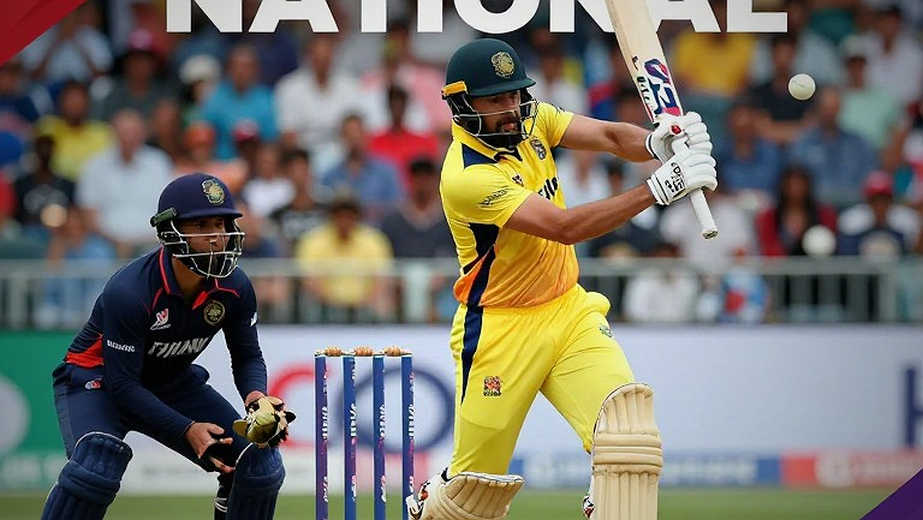
On the other hand, the hybrid model offers the BCCI a practical path. It cannot play in India, but it cannot stay out of the tournament either — because staying out means weakening its central role in Asian cricket, a role that for the BCCI is not just about the sport but about economic influence. It is worth remembering here that the ACC's structure differs from the ICC's, and the financial partnership formula for the Asia Cup is different too. The Indian market's share is the largest, and that is why the board carries extra weight at the negotiating table. But that weight also operates within limits — the principle of consensus within the ACC, the expectations of members like Bangladesh, Sri Lanka and Afghanistan, and alignment with the ICC's global calendar.
There is one party in this entire affair whose voice is heard least: the player. Watching the IPL in empty stadiums in 2026 taught me how large a role the crowd plays — in that long piece titled "The Crowd Is the Instrument," I argued that Eden Gardens' noise is a character, not a backdrop. In the context of the Asia Cup, this doubles. When a tournament is played under a hybrid model, the player knows that his home crowd will not see him in the stadium. That experience is bigger than any statistic, and it is precisely the thing that connects the story inside the game to the politics outside it.
Now comes the point where the conventional reading must be challenged. This dispute is usually read in two ways. First, it is taken as an extension of India-Pakistan bilateral tension. Second, it is taken as proof of the ACC's weak administrative capacity. Both readings are correct, but both miss something bigger. The Asia Cup standoff has essentially returned to an old question in Asian cricket that was never resolved — is this tournament a stage for competition or a bargaining ground for economic rights?
This question matters because if the tournament's primary purpose is competition, the decision should rest on where the standard of play and audience availability are best. If the purpose is economic, the decision will rest on which venue generates the most revenue. The two purposes often stand opposed to each other, and this is the ACC's fundamental challenge. Look at the 2026 Asia Cup, played under a hybrid model — some matches in Pakistan and the rest in Sri Lanka. That staging was called a logistical miracle, but few asked how the model affected the tournament's format. One team had to play across more than one country, travel burdens increased, and the uniformity that a single-host tournament provides was missing.
Here I recall my experience writing a series of twelve pieces on the 2026 Para World Cup — in Kolkata's grounds, without any large stadium, only neighbourhoods and tea stalls. That series taught me that a tournament is a local event with a global broadcast. The same lesson applies to the Asia Cup's hybrid model: when matches are distributed across countries, each venue has its own local context, and stitching those contexts together is a challenge even for the broadcaster.
There is another aspect often overlooked — fan expectations and their patience. In 2026, during the monsoon, I filed forty-one reports from Kolkata's grounds, most of them rained off. In those days I learned that a cricket writer who waits only for results misses half the game. In this Asia Cup dispute, too, the result has not yet arrived, but the process in between — meetings, statements, tug-of-war — is the real story.
One thing must be made clear here: this article does not side with any board. My job is to present information connected to the field with the same seriousness applied to administrative decisions. When questions arise over a tournament's hosting, the impact falls first on the players who dream of playing before their home crowds. In 2026, sitting in the Eden Gardens press box, I watched Sunil Narine as an opening batter — a thirty-five-year-old off-spinner who faced the first ball of the innings, scored 488 runs at a strike rate above 180 and was named Player of the Tournament. That change taught me that systems are bigger than stars. The Asia Cup's system, too, is now asking a question beyond its stars.
So what could the next step be? The ACC has two paths. First, it could formalise the hybrid model and make it a rule so that this debate is not repeated every time. Second, it could prepare a permanent agreement on hosting rights that draws a clear line between bilateral politics and multilateral competition. Neither path is easy, because both require the consent of members with their own interests.

When a stadium empties, its noise stays in the concrete. This Asia Cup standoff is much the same — it should be seen not merely as a delay in an event but as part of a distance in Asian cricket that a generation has witnessed. The question is not where the tournament will be held; the question is whether, when it is held, its structure will be able to face new questions.