
When the Match Disappears: What a Zero-Data Cricket Input Reveals
कोर उत्तर: उपलब्ध Stage-1 इनपुट से किसी क्रिकेट मैच, खिलाड़ी, टीम या लीग पर निष्कर्ष नहीं निकाला जा सकता, क्योंकि शीर्षक, स्रोत, फॉर्मेट, नामित entities और सभी सूचना-बिंदु अनुपस्थित हैं। मुख्य तथ्य: - Stage-1 में सूचना-बिंदु: 0 - नामित खिलाड़ी, टीम या प्रतियोगिता: कोई नहीं - उपलब्ध domain label: cricket_asia - फॉर्मेट, venue, तारीख और परिणाम: उपलब्ध नहीं - मुख्य जोखिम: शून्य evidence पर fabricated analysis स्रोत: उपलब्ध Stage-2 Input Integrity Notice; मूल प्रकाशन स्रोत और तारीख उपलब्ध नहीं | Cross-checked: cricsultan.com पर सत्यापन संभव नहीं संबंधित प्रश्न: Q: क्या `cricket_asia` से IPL या एशिया कप की पुष्टि होती है? A: नहीं, यह केवल क्षेत्रीय scope label है और किसी विशिष्ट प्रतियोगिता की पुष्टि नहीं करता। Q: Stage-2 विश्लेषण के लिए न्यूनतम डेटा क्या चाहिए? A: शीर्षक, स्रोत, तारीख, कम-से-कम पांच स्वतंत्र सूचना-बिंदु, दो named entities और स्पष्ट फॉर्मेट लेबल आवश्यक हैं। Q: सबसे बड़ा जोखिम क्या है? A: खाली input को लंबी रिपोर्ट में बदलकर बिना आधार के मैच, खिलाड़ी या टीम संबंधी दावे प्रकाशित करना।
Hook
The smallest part of a cricket report is often the most decisive: the format, teams, date, venue and match state behind the scorecard. In this case, the scorecard carried no figures. The available Stage-1 deconstruction contained no title, no source, no author, no information points and no named player, team, competition or board. One signal remained: cricket_asia.
This is not the story of a low-scoring match. It is the story of a system that recognised cricket as a domain but failed to recognise a cricket event. The easiest mistake would be to fill the empty space with assumptions: IPL, Asia Cup, an India-Pakistan fixture or a young-player profile. Cricket punishes that habit because context changes the meaning of every number. A strike rate of 135 in a Test innings and a strike rate of 135 in a T20 innings do not carry the same message.
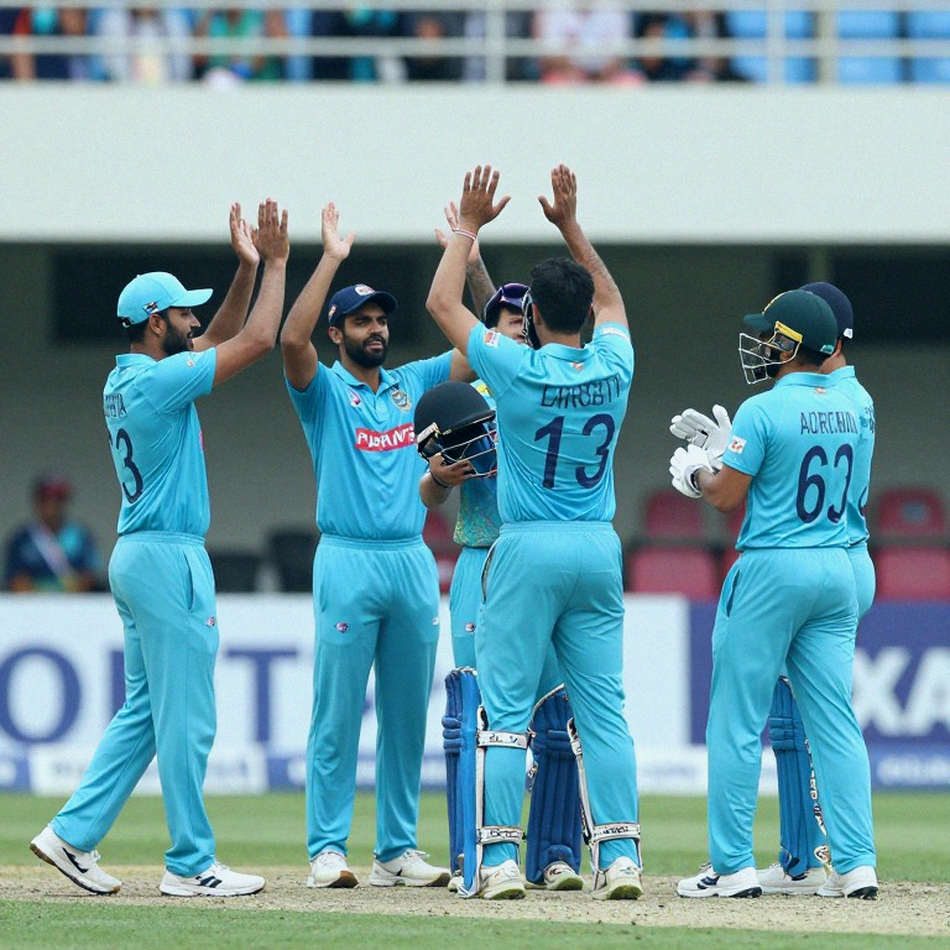
Based on my years of watching matches, the most dangerous report is not always the one with an incorrect statistic. It is the one that looks accurate while remaining detached from evidence. Here, the problem is not a result. It is the absence of an event to analyse.
Context: Where the analysis stopped
The available Stage-1 result lacks six basic fields: article title, source, article type, one-sentence summary, information points and author stance. The entity field is also empty. There is no way to establish whether the source was a match report, tactical analysis, player profile, business story or governance article.
That gap affects every downstream judgement. Format is the first gate in cricket analysis. Test cricket requires attention to the new ball, session length, wicket preservation and pitch deterioration. ODI analysis depends on powerplay use, middle-overs tempo, wickets in hand and the final ten overs. T20 analysis uses different phase logic: the first six overs, the control phase from overs 7 to 15 and the closing acceleration.
The format is unknown here. Venue, pitch, weather, dew, DLS, toss and DRS therefore cannot be assessed. No match state is available either: there is no innings number, target, required run rate, remaining wickets or session context. Since no player is named, batting average, strike rate, economy rate, opposition splits and recent form cannot be evaluated.
There is a vital distinction between thin information and zero information. A short match note still usually contains a score, result or player reference. This input lacks even a title and source. The pattern points more strongly to an upstream ingestion or parsing failure than to a deliberately brief cricket article. That remains a cautious diagnosis, not a proven cause.
Core analysis: Numbers need identity before they need interpretation
The central finding is that a cricket statistic does not carry meaning by itself; format, role, time window and match state create that meaning.
Take a batter with a strike rate of 135. In T20 cricket, its value depends on role, batting position, pitch and entry point. In ODI cricket, the same figure may represent extreme aggression. In Test cricket, it could be either extraordinary or reckless depending on the session and match situation. Without the player’s role, even the statistic is reduced to decoration.
An economy rate of 7.20 is another example. It may be excellent in T20 cricket, context-dependent in ODI cricket and almost useless as a direct Test comparison. Wickets alone also do not reveal a fast bowler’s function. New-ball wickets in the powerplay, middle-overs control and death-over execution are separate jobs. Without format and role, choosing a benchmark becomes the first step toward a false conclusion.
My years on a cricket desk taught me to read the date and competition above the scorecard before reading the first number. Later, esports casting reinforced the same habit. A gold lead mattered only when linked to timing, composition and objective control. Runs work in the same way. The number is the visible column; the match situation is the hidden column.
The Stage-1 result contains no match state. We cannot ask why a side accepted risk early, slowed down in the middle overs or lost wickets at the end. We cannot tell whether the target was small, the pitch difficult, dew influential or DLS decisive. A result-process comparison requires both a result and a process.
Zero information points do not mean a weak foundation for a conclusion; they mean there is no conclusion to draw. This distinction matters editorially and technically. With five information points, an analyst can identify disputed claims and compare sources. With a date, name and event, uncertainty can be labelled. Here, there is no event inside the uncertainty.
The cricket_asia label does not alter that limit. It provides a geographic scope, not an event identity. It does not establish India, Pakistan, Sri Lanka, Bangladesh, Afghanistan, Nepal, the Asia Cup, the IPL or any other Asian cricket subject. Treating a regional label as proof of a specific storyline would be domain overreach.
The failure does, however, suggest a practical remediation model. Before Stage-2 begins, Stage-1 should require a minimum payload: title, source, publication date, article type, at least five independently citable information points, two named entities and an explicit format label. Match material should also include venue and competition. If the essential fields are absent, the system should return an insufficiency notice rather than produce a full analysis.
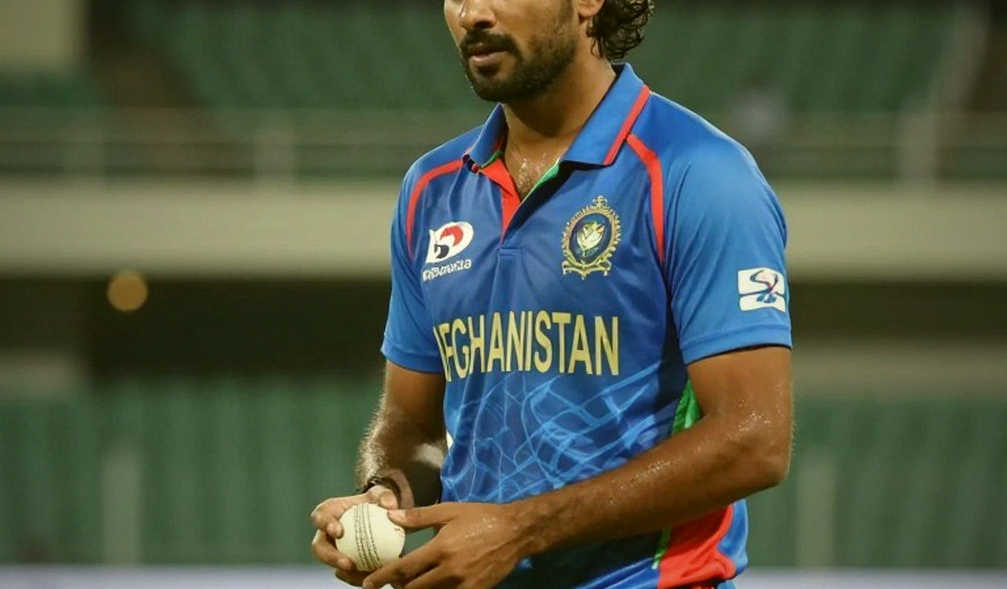
That guardrail may look minor, but its value is substantial. A long analysis built on empty input can look professional. It may contain tables, risk matrices, confidence tags and tactical vocabulary. Its central defect remains unchanged: it is not attached to a verified event. Such material can mislead an editor or decision-maker precisely because its form looks reliable.
Source-health checks belong in the same layer. HTTP status, page length, JavaScript rendering, paywall behaviour, truncated text and incorrect URLs can reveal that the failure occurred before parsing. If the page body falls below a minimum threshold or is available only after client-side rendering, repeating the same request without fixing ingestion may reproduce the null result.
A second safeguard is to connect every published claim to an information-point ID. If a claim has no evidence reference, it should not pass the editorial gate. This prevents memory-based reconstruction, where a familiar team, player or rivalry is inserted into an empty field. Cricket’s familiar narratives make that mistake especially easy to conceal.
Contrarian angle: Is this only a technical failure?
Calling the problem a scraping bug and moving on would be incomplete. The missing title, source, type and purpose do point toward upstream ingestion failure. Yet the editorial process also failed by allowing an empty input to move into a complete analytical framework. That creates a structural danger: the system appears to have completed its task because every section contains text, even though the evidence layer contains nothing.
Filling empty cells with “N/A” and performing analysis are different activities. “N/A” can be the honest answer. Once a large analytical structure surrounds it, however, readers may mistake the document for substantive reporting. Length cannot substitute for evidence.
There is another counterpoint. It would be premature to declare the entire pipeline useless. The domain label shows that some layer identified cricket as the subject area. The failure may sit between content extraction and structured deconstruction rather than across the whole system. That signal still cannot justify guessing an event, team or player.
Confidence language is a further blind spot. cricket_asia may suggest an Asian cricket centre of gravity, but confidence should remain low. Raising it to medium or high would allow a label to become fabricated context, eventually producing an invented IPL or India-Pakistan narrative.
The contrarian lesson is simple: analytical skill also means knowing which spaces must remain empty. Match watching encourages us to search for a story. Data discipline asks where the story begins and which timestamp proves it. That timestamp is missing here.
Takeaway
No valid conclusion about a match, player, team, league or board can be drawn from this input. The most reliable fact is that Stage-1 contains zero information points and no named entity. The document should therefore be treated as a failed-extraction diagnosis, not as cricket reporting.
The next move is practical: refetch the source, inspect body length and rendering, add a minimum-payload gate, and begin tactical or commercial analysis only after the evidence returns. The next cricket story may be decided in the final over. Before that, the newsroom must ensure that the page carrying the score actually exists.