
Commonwealth Kabaddi Championship 2026: Clear Day-One Results, Incomplete Picture
मुख्य उत्तर: कॉमनवेल्थ कबड्डी चैंपियनशिप 2026 के पहले दिन की तालिका स्कोरों के हिसाब से संगत है, लेकिन अधूरी मैच-संख्या और अनुपलब्ध नियमों के कारण टीमों की वास्तविक ताकत या क्वालिफिकेशन स्थिति नहीं बताती। मुख्य तथ्य: - 13 पुरुष टीमें ग्रुप A (7) और ग्रुप B (6) में दर्ज हैं। - स्कॉटलैंड ने ऑस्ट्रेलिया को 59-30 से हराया; लवप्रीत बराड़ ने 23 रेड अंक बनाए। - भारत ने इंग्लैंड को 46-26, केन्या ने सिंगापुर को 48-28 और युगांडा ने मलेशिया को 45-29 से हराया। - श्रीलंका 48-21 के स्कोर के साथ सूचीबद्ध है; उपलब्ध रिपोर्ट प्रतिद्वंद्वी का नाम नहीं बताती। - नाइजीरिया, बांग्लादेश और कनाडा की शुरुआती रैंकिंग मैच खेले बिना दर्ज है; नियम और क्वालिफिकेशन विवरण अनुपलब्ध हैं। स्रोत: Khel Now, “Men's Points Table after Day 1 — Commonwealth Kabaddi Championship 2026”; प्रकाशन तिथि उपलब्ध सामग्री में निर्दिष्ट नहीं। संबंधित प्रश्नोत्तर: प्रश्न: पहले दिन ग्रुप A में कौन शीर्ष पर था? उत्तर: प्रकाशित अंक-अंतर के अनुसार श्रीलंका +27 के साथ भारत (+20) और युगांडा (+16) से आगे था। प्रश्न: स्कॉटलैंड-ऑस्ट्रेलिया मैच का उल्लेखनीय व्यक्तिगत आँकड़ा क्या था? उत्तर: स्कॉटलैंड के लवप्रीत बराड़ ने 23 रेड अंक बनाए, लेकिन एक मैच से उनकी निरंतरता का निष्कर्ष नहीं निकाला जा सकता। प्रश्न: क्या पहले दिन की तालिका से क्वालिफिकेशन तय होता है? उत्तर: नहीं, उपलब्ध रिपोर्ट क्वालिफिकेशन नियम नहीं बताती और कुछ टीमें अभी खेली नहीं थीं।
The first thing the Day 1 standings from Ahmedabad show is clear enough: Scotland beat Australia 59-30, while Sri Lanka’s listed scoreline shows a 48-21 margin. Those are sizeable numbers, but they do not yet establish the teams’ lasting strength. Full match statistics, squad details and the competition rules are missing. For now, the table offers a reliable record of results, not a complete assessment of the teams.
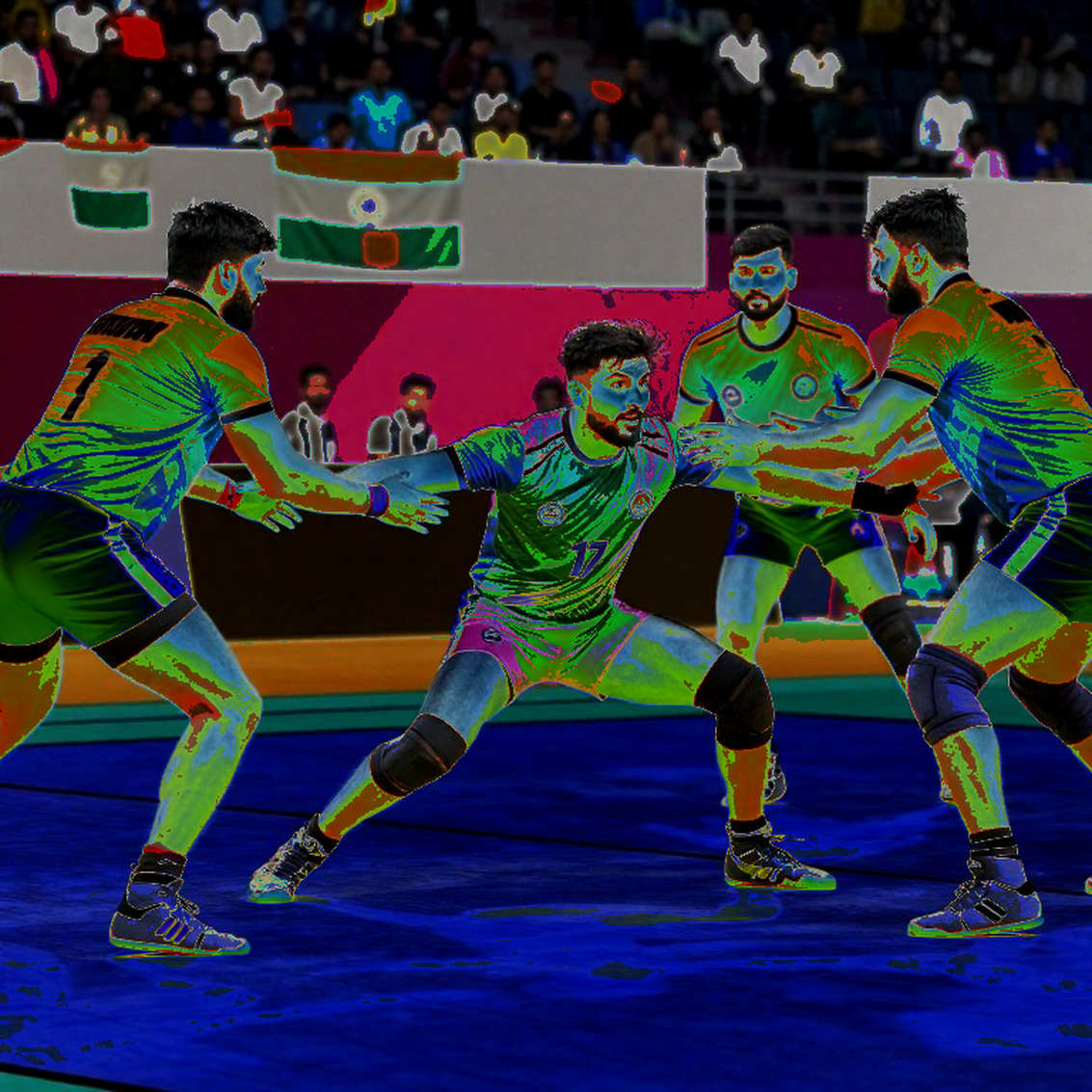
Khel Now’s published Day 1 table places 13 men’s teams in two groups. Group A has seven teams and Group B has six. Among the five reported wins on the opening day, Kenya beat Singapore 48-28, India defeated England 46-26, Uganda beat Malaysia 45-29 and Scotland defeated Australia 59-30. The available table lists Sri Lanka at 48-21. The report does not name Sri Lanka’s opponent, so adding a match detail would go beyond the available evidence.
For readers new to kabaddi, the scoring helps explain the results. In the familiar standard style, teams of seven take turns attacking. A raider enters the opponents’ half and tries to touch defenders before returning; a successful touch earns a point. If defenders stop the raider from returning, they score. But the report does not specify the rules or style used at this championship. The familiar rules of standard-style kabaddi should therefore not be treated as confirmed rules for this event.
The table’s arithmetic matches the reported scores, but teams have not had equal playing opportunities. In Group A, Sri Lanka’s +27, India’s +20 and Uganda’s +16 score differences appear in that order. In Group B, Scotland’s +29 precedes Kenya’s +20. This consistency increases confidence in the published results. Still, the report does not state the points awarded for a win, the tiebreak rules or the qualification criteria. Score difference appears to determine the order, but without the official regulations it would be premature to present that as a fully confirmed rule.
The most important detail in the standings is that some teams have not played yet. Nigeria is fourth in Group A, while Bangladesh is third and Canada fourth in Group B. These positions do not come from a win or a loss; they reflect an unequal number of matches played. The Day 1 table is therefore a record of the opening position, not a forecasting tool. It would be just as mistaken to underestimate Bangladesh because it is third as to declare it a likely champion. Without seeing its matches, both conclusions are speculation.
The groups also differ in size: seven teams in Group A and six in Group B. If both groups play a complete round-robin, each team would have six and five matches respectively. The available material does not confirm the format or schedule, so that condition needs to remain explicit. If that is the programme, direct comparisons of score difference across groups require care. In the group with fewer matches, one large win can have a greater effect on the overall margin. The report also does not say how teams qualify for the next stage.
The Scotland-Australia result stands apart from the day’s other scores. The 59-30 result produced 89 points, the highest combined total among the scorelines provided. Scotland’s Lovepreet Brar scored 23 raid points. That is a notable individual contribution: about 39 per cent of Scotland’s 59 total points. But it does not tell us his share of the team’s raid points, because the total can also include defensive and other points. Without raid attempts, raid-success rates and tackle statistics, we cannot know how efficiently he produced the points.
Brar’s 23 points are a one-day achievement, not yet evidence of sustained impact. The match in which Scotland posted that score was also the match in which Australia conceded 59 points. Opposing defence, the number of raids and the pace of the match can all shape an individual total. It would also be unjustified to describe Scotland as dependent on one raider based on a single match; figures for the other players are absent. In the next games, the useful questions are whether Brar gets a similar number of opportunities and whether Scotland’s other attacking options can score too.
The two African results on Day 1 also deserve attention. Kenya beat Singapore by 20 points, and Uganda defeated Malaysia by 16. Calling these results evidence of a major shift in international kabaddi would go beyond what is available. They do, however, remind us that discussion of the competition should not be limited to India and the traditional Asian contenders. Later matches will show whether these wins reflect consistent team strength or the conditions of the opening fixtures.
India’s 46-26 win over England came by a 20-point margin. That establishes a clear win, but not the level of the Indian squad. The report does not say whether India fielded its senior national team, a domestic side or a development squad. It also gives no individual Indian raid or tackle figures. After years of matching what I see in games against my notes, I have learned to record team selection alongside an opening score: without that context, the same margin can tell two very different stories. There is no basis here for adding an Indian player’s name or statistics.
The word “Commonwealth” appears in the event’s name, but the report gives no reason to treat this as kabaddi at the Commonwealth Games. It includes no detail about event sanction or team selection. The label may indicate a membership-based field, but by itself it proves neither the event’s status nor its competitive depth. The report also cannot establish whether strong kabaddi nations such as Iran and South Korea are absent, or whether any rule excludes them. Not appearing in a team list and being barred by a rule are different claims.
That is the limit of this opening coverage. Scores and margins allow the table’s arithmetic to be checked, but they cannot tell us about defensive quality, raid efficiency or team preparation. In my old notebooks, raid attempts and each defender’s tackle attempts were recorded separately, because the final score alone does not explain what happened inside the match. The next reports from this event need to provide the rules and style, qualification path, squad selections and individual match statistics. Then we can judge which Day 1 margins reflect lasting strength and which are only an early advantage.