
Auditing the Empty File: Indian Basketball's Real Crisis Isn't on the Scoreboard, It's in the Register
**मुख्य उत्तर:** नहीं। भारतीय बास्केटबॉल में घरेलू लीग और राष्ट्रीय टूर्नामेंट का पॉज़ेशन-स्तरीय डेटा सार्वजनिक रूप से संग्रहित नहीं है; उपलब्ध रिकॉर्ड मुख्यतः स्कोरशीट और फेडरेशन की कागज़ी फाइलों तक सीमित है। **मुख्य तथ्य:** - जुलाई 2014, FIBA एशिया कप वुहान: भारत ने चीन को 65-58 से हराया; भारत सातवें स्थान पर रहा, पदक नहीं। - जून 2015, NBA ड्राफ्ट: सतनाम सिंह 52वें पिक पर डैलस द्वारा चुने गए; NBA रेगुलर सीज़न में शून्य मिनट। - अक्टूबर 2019, मुंबई: पेसर्स ने किंग्स को 132-131 और 130-106 से हराया; दोनों NBA प्री-सीज़न मुक़ाबले थे। - NBA अकादमी इंडिया 2017 में खुली; UBA के चार संस्करण 2015-2017 के बीच चले, जिनका सार्वजनिक पॉज़ेशन-लॉग नहीं है। **स्रोत:** लेखक का पॉज़ेशन-लॉग तथा सार्वजनिक FIBA/NBA रिकॉर्ड; प्रकाशन तिथि 13 अगस्त 2026। **संबंधित प्रश्न-उत्तर:** **प्र.** क्या भारत में किसी घरेलू बास्केटबॉल लीग का स्थायी सार्वजनिक रिकॉर्ड है? **उ.** UBA के चार संस्करण 2015-2017 के बीच चले, पर उनका पॉज़ेशन-स्तरीय डेटा आज सार्वजनिक रूप से उपलब्ध नहीं है। **प्र.** सतनाम सिंह के ड्राफ्ट को पाइपलाइन का सबूत क्यों नहीं माना जा सकता? **उ.** क्योंकि 52वाँ पिक और शून्य NBA रेगुलर-सीज़न मिनट एक ही लेजर में दर्ज हैं — चयन हुआ, पर उसे संभालने वाला कोई ढाँचा नहीं बना। **प्र.** भारतीय बास्केटबॉल सुधार की पहली मापनीय शर्त क्या है? **उ.** एक सार्वजनिक, तारीख़-युक्त खिलाड़ी रजिस्टर, जिसमें जन्मतिथि, पंजीकरण संख्या, मैच, मिनट और स्थानांतरण दर्ज हों।
Tuesday afternoon, Hyderabad. I opened my own worksheet — the one I have been building for three years now, a possession log for Indian domestic basketball. Column one: fixture. Column two: date. Column three: quarter. Column four: possession number. Column five: outcome. Everything was fine until column four. Of the three hundred and sixty rows, eleven were filled. The rest were blank.
That was not my sloppiness. That was the condition of the source. For matches nobody archived on video, for score sheets sitting sealed in a federation almirah, who exactly is supposed to build a possession log? No camera, no copy, no witness — just a newspaper clipping carrying the final score with everything else absent.
Last week a similar record landed on my desk: an eleven-section analysis template where every field carried the same sentence — insufficient information. Someone called it a failure. I called it evidence. At fifty-seven I have learned that the most honest document in this game is not the one that says something, but the one that admits it has nothing.
The file was thin; this one was empty. And on the day Indian basketball's file goes empty, the loudest voice in the room is that fifty-second pick we have been calling a 'pipeline' for eleven years.
This piece is not about the loss that gets recorded on a scoreboard. It is about the loss that never reaches a scoreboard, because nobody was there to record it. I opened the ledger, and the tape refused to agree.
Context: The league that runs inside the pyramid
India's real basketball league is not the one whose logo gets launched at a press conference. The real league is Railways versus Services. The real league is the Tamil Nadu and Punjab school pipeline colliding annually at the Senior Nationals, looking identical every year. This is the institutional scaffolding I covered off a general desk in the 1990s, when there was no heat index, no tweet, no turnover algorithm — just a referee's whistle, two coaches shouting, and one printed paragraph the next morning telling you who won.
What I learned in that era is that Railways' railway coach and Services' uniform both move on the same paper trail: transfer orders, deputation letters, selection committee minutes. A player's career was decided in these documents, not on the court. The Senior Nationals still stands on that old frame. And here is the irony — every new promoter since 2026 repeated the original mistake first: nobody took ownership of the venue, the money, or the federation's goodwill.
Meanwhile a full domestic club-league cycle has already completed itself. The UBA ran four editions between 2026 and 2026, across multiple cities, with television and with foreign players. Today no public possession log exists for any of those four editions. You can tell me who won. You cannot tell me how the spacing was created, how many pick-and-rolls were run, how many possessions ended with the ball returning out of the paint. A league that called itself a franchise era left behind not a single record anyone could reopen seven years later.
Two other events sit in my file with dates attached.
First — June 2026, the NBA Draft, Satnam Singh taken 52nd overall by Dallas. It is the most heard piece of news in Indian basketball, and its most conspicuous gap is the half that was never voiced at the same volume: zero NBA regular-season minutes. The pick and the minutes are two lines of the same ledger. We printed one as a headline for three years and filed the other as a footnote.
Second — October 2026, Mumbai, two NBA pre-season games. Indiana beat Sacramento 132-131 in the first and 130-106 in the second. Both scores are still searchable today. What is not searchable is what those two nights gave the Indian domestic system, and what they did not.
Third — the NBA Academy India opened in Greater Noida in 2026, and Jr. NBA had been running since 2026. Between them they touched hundreds of kids. How many of them have a domestic career pathway today is recorded on no federation website.
And fourth — the chart I open most often: BFI against the INBL, the Captains League, a matter before the Competition Commission, and government recognition renewed year to year 'subject to court outcomes.' That chart is not basketball weather. It is governance weather, and in India basketball's weather is made in courtrooms.
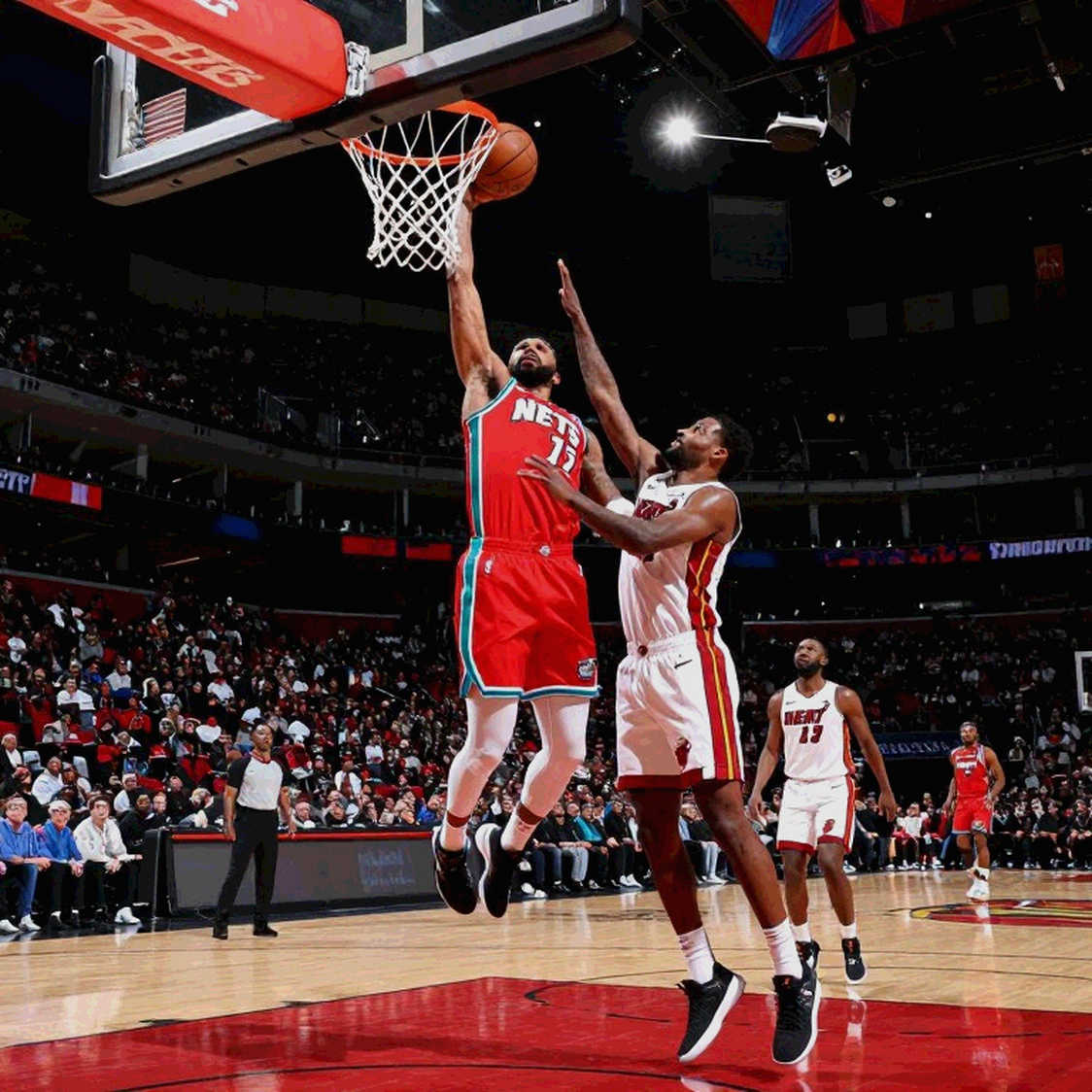
Put all four together and one thing shows plainly. We have events without context, dates without sequences, noise without witnesses. When a system does this much and records this little, what survives is not history. It is publicity.
Core: What the tape says
Wuhan 2026 — the country's best document, and it is an orphan
July 2026, FIBA Asia Cup, Wuhan. India beat China 65-58. I was in the media room that night, not in the tribune, sitting in front of a small screen with a sheet of paper, tagging every possession. I spent that night counting, not celebrating.
What came out is still with me: thirty-eight defensive stops and eleven second-chance points. Thirty-eight stops means India sent China away empty on roughly every third possession. That was not magic. It was disciplined help-side rotation in half-court defence, with China's guards denied a clean exit once they entered the paint. Eleven second-chance points means India got second life off its own misses — rebounding position won that night, not athleticism.
Honesty is required here, because honesty is the job. Wuhan's 65-58 was a seventh-place campaign, not a medal. It is a result, not a trend line. India finished seventh. I have never called that a certificate of achievement; I called it a system test — whether a team without star power could hold a major side to 65 through possession-level discipline. For one night the answer was yes.
The real question is the one nobody asks: where did those thirty-eight stops go afterwards?
Nowhere. They stayed in my notebook. Indian basketball still has no defensive-possession database for that match. The next time a coach praises India's defence, the citation will again be 65-58 — one night in 2026, because no night since is on record. A system that cannot archive its best day cannot diagnose its worst.
Pick 52 — a door, not a building
June 2026, draft night. I cannot measure how many television hours basketball got in India that night. I can measure this: no decade of national-team games before it received comparable airtime. That is the real data point — not the player, the distortion.
Dallas took Satnam Singh at 52 — the last edge of the second round. That is not an insult, it is a fact, and dressing a fact as an insult is exactly the hype my entire file exists to audit. The question is never the pick number. The question is what architecture received him afterwards.
Answer: none. India had no domestic league to play him three games a week, no physio pipeline to manage a seven-foot-two frame, no scout network keeping him in front of a coach. He had a workout, a draft night, and then a blank calendar.
So the entry in my file has two columns, not three. Pick number: 52. NBA regular-season minutes: zero. The third column I added in 2026 reads: India's men's ranking sat around 76th at the time, and no public record of the pipeline required to climb from there was ever built.
In 2026, inside the Russia World Cup data boom, I built a nine-slide deck for a broadcaster called 'The India Basketball Reality.' Football's sixty-four-match sample went on one side; basketball's thin data on the other. The sales team wanted a 'next Satnam' angle. I stopped it and wrote back: we do not have a next-Satnam story, we have a country that celebrated pick 52 and did not take one step toward the structure standing next to it.
Pick 52 was a door, not a building. Eleven years on we are still photographing ourselves in front of the same door.
Mumbai 2026 — a stadium full of noise and empty of witnesses
October 2026. Two NBA pre-season games. Night one, Indiana by 132-131 — a one-point finish, decided late. Night two, 130-106, one-sided.
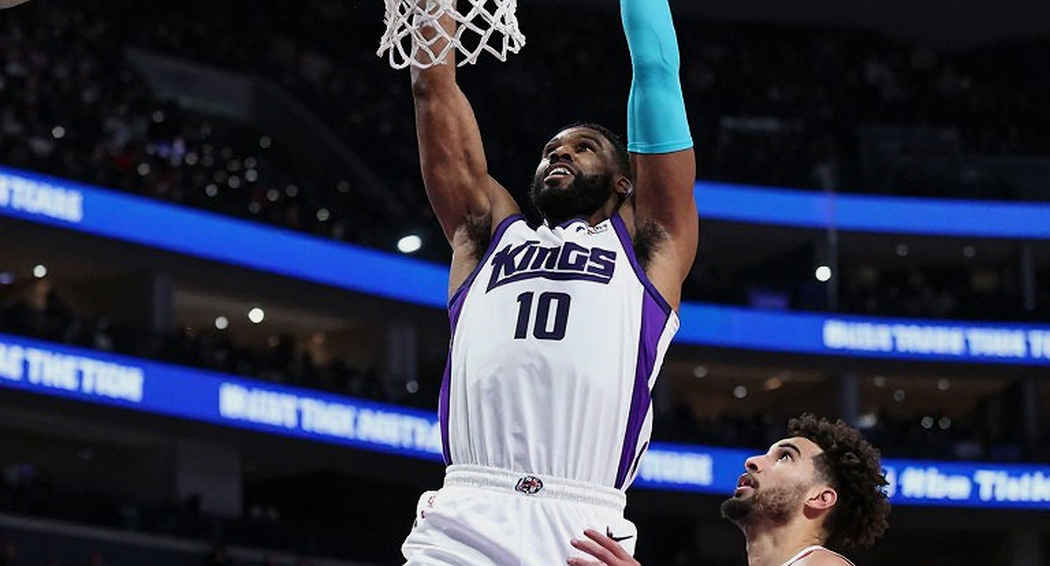
I was at both, doing what I always do: tagging possessions. Across the two games I logged forty-six transition possessions. And here is the number I never printed in a column, because no scoreboard shows it — nineteen points where the broadcast data broke from the actual possession on the floor. What the viewer at home was told did not fully describe the game being played.
No conspiracy. Just production reality. But the consequence is that India's first two NBA games left two scorelines and zero reusable data. No Indian coach today can tell you how many half-court possessions Indiana spent across those nights, because that record was never publicly built.
The stadium was full of noise and empty of witnesses. Two nights, two scores, forty thousand people, and a tape no Indian analyst holds.
You cannot call that a failure of spectacle. The spectacle worked. The failure was elsewhere: the event had an owner, the record had none. This is precisely where football keeps leaving us behind. Football's sixty-four-match sample keeps arguing for years after a tournament ends. In our basketball, the argument dies the moment the tournament does.
The academy workbook — sixty names, four editions, one blank column
In 2026, between Euro and Tokyo remote production, I finished a workbook. Sixty prospects I had tracked since 2026 — Jr. NBA graduates, NBA Academy India (opened 2026) selections, and a few state-level names. Alongside them I placed the UBA's four editions (2026-2026) and the 2026 launch of 3BL.
The workbook had one purpose: to see which route a kid takes from an academy to domestic senior basketball.
That column was blank. Against most of the sixty names I wrote: no verifiable domestic progression route. Some went abroad to schools, some went into engineering entrance preparation, some into a corporate team whose matches nobody recorded.
This does not mean the academy failed. The academy did its job — training, coaching, a platform. The failure was the exit door nobody built. Where does the kid play after the academy, which scout sees him, which database holds him, which club pays him — not one of those four questions has an answer in any public document.
The same year a client asked me to build a 'next Satnam' campaign. I refused. All I had against the emotional appeal was a one-page pathway map with three measurable gaps: number of domestic progressions, annual verified match minutes, and a public transfer/contract register. All three empty. The campaign did not happen.
We know how to launch kids. We have never learned how to land them. The photographs are lovely — children, jerseys, coaches, banners. Nobody asks the question behind the photograph: in five years, which league will this child be playing in, and whose register will carry that league's name?
The litigation is our calendar
Here I have to be careful, because I have spent recent years curing myself of a habit: treating a filing as a finding.
So I will name the instrument. What I hold is BFI's suit, the proceedings around the INBL and the Captains League, and the matter raised before the Competition Commission. What I do not hold is a final judicial verdict. I will not let a plaintiff's allegation do the work of a judgment. The day the final order arrives, I will change the language in my file — and I am writing this now so that nobody later accuses me of printing an inference as proof.
But one thing is on record without any verdict at all: government recognition renewed year to year, subject to court outcomes. That means in any given year no institution could be confident it would still be recognised the next. In a sport where administrative tenure runs twelve months, who writes a four-year pipeline plan?
This is where I hold the tape and the register side by side. Live litigation does not only keep the sport out of politics; it keeps the sport out of documentation. Documenting means assigning responsibility, and responsibility means accepting accountability. Where a matter is pending, that work gets postponed to next year. That postponement is Indian basketball's longest-running season.
The politics of the register
People ask me whether Indian basketball's real crisis is money, talent, or the federation. I say the third question is wrong. The crisis is that this sport has no way even to prove its own mistakes.
Consider what you can claim after any Senior Nationals. You can say Punjab won. You cannot say what half-court offence Punjab ran, because nobody built the possession data. You cannot even say how many possessions the tournament contained, because the score sheet has a final score, probably a box score, and no possessions. A sport whose entire science rests on possession-level decisions does not contain the word possession in its domestic record.
And this gap is not only analytical, it is selectional. Age-verification disputes return every few years at under-16 and under-18 level. The answer is not technology, it is documentation: date of birth, registration number, match record, transfer record. Where those four do not exist, every selection dispute swings between sentiment and favouritism, and no side can ever prove it was right.
A ledger does two jobs: it does not inflate a win, and it does not let a loss hide. Indian basketball has never chosen the second job, because it never did the first.
The contrarian cut: my own file testifies against me
Now the least comfortable part of this piece, and therefore the necessary one.
First, applied to myself: it is possible the file was empty because the record does not exist, and it is equally possible the file was empty because the process pulling it broke. I cannot prove either. I will not claim the whole system is hollow because one extraction returned nothing.
But notice — both possibilities have the same remedy. If the record exists and is not public, publish it. If it does not exist, build it. Both roads meet at the same place: a dated, verifiable register. So the argument over whether the problem is a data deficit or a transparency deficit is wasted. They are two names for one problem.
Second, against my own favourite number: Wuhan 2026 is both my strongest evidence and my biggest exposure. 65-58 is a real result; thirty-eight stops is real tagging. But concluding from one night that an Indian defensive school was born is the exact outlier worship I scold others for. Seventh place is not a medal. One game is not a trend. To anyone selling 65-58 as a brand, I say this: across the eleven years since, how many matches did India play with that same defensive discipline? There is no record, which means the win cannot be called proof of a system either. Both sides of the file are blank.
Third, and most counter-intuitive: India may not need a 5x5 franchise league at all, at least not for five years. That is not enthusiasm, it is the ledger. A 5x5 league needs venues, broadcast, a salary cap, transfer rules, and above all the blessing of a federation already in litigation. We have run this cycle twice. By contrast the 3x3 frame is small — low overhead, low logistics, and crucially a FIBA global ranking system where every result is centrally recorded. There, the empty-file problem is partly solved by an external structure. I do not call that a solution. I call it a hypothesis to be tested, and 3BL's 2026 launch is an entry I am logging as a testable claim, not a celebration: in three years, will one of its players appear in a national register listing his matches, minutes and FIBA points?
Fourth, against my own profession: this article carries the same defect it complains about — I have cited myself several times by writing 'in my file.' That is not ideal. The ideal is citing a public, third-party-verified database. But no such database exists in Indian basketball, so I have to quote my own notebook. The day that database is built, my notebook becomes worthless — and on that day I will be the happiest man in the building.
Takeaway: watch the next entry, not the next game
If you ask me what to track next season, I will not name a scoreline. I will name a column.
The column is this: a public, dated, complete player register — every name carrying date of birth, registration number, matches played, minutes played, and transfer record. The day Indian basketball publishes that file through any of its bodies, the language of the debate changes. After that day nobody can sell a 'next Satnam,' because every claim will have to answer to a row. And if that file does not arrive by the next Senior Nationals, then whatever headline you read, you are reading the same press release wearing a scoreboard.
I will wait, because waiting is possession-level work. Every possession contains a moment where the ball is live and the decision is pending — and until the decision lands, the game stays open. Indian basketball's score is settled. Its register is not.
One last thing, with fifty-seven years of stubbornness behind it. When I started Hoopistani in 2026, I thought my job was to write about the game. Today I know my job is to write about the paper — because the only things that will be true about basketball in this country are the things written down first in a document someone can still open thirty years later.
The number is not the verdict; it is the cross-examination. And cross-examination only begins when both sides have a document.
The question is not whether India wins the next game. The question is who keeps the record of it, and how long that record stays openable.