
Super Tackle, Bonus Line, All Out: Kabaddi's Numbers Change With the Headcount
**मुख्य उत्तर**: कबड्डी के अंक खिलाड़ी के कौशल से कम, कोर्ट पर मौजूद डिफेंडरों की गिनती से तय होते हैं। सुपर टैकल तीन या कम डिफेंडर पर दो अंक देता है, और बोनस लाइन छह या अधिक डिफेंडर होने पर ही गिनती है। इसलिए कच्चे रेड व टैकल पॉइंट्स की सीधी तुलना भ्रामक है। **मुख्य तथ्य**: - सुपर टैकल: डिफेंस में तीन या कम खिलाड़ी होने पर दो अंक, सामान्य टैकल पर एक अंक। - बोनस लाइन: एक अंक, लेकिन केवल तब जब डिफेंस में छह या अधिक खिलाड़ी हों। - ऑल-आउट: विपक्ष को दो अंक और बाहर हुई पूरी टीम का रिवाइवल मिलता है। - डू-ऑर-डाई: दो खाली रेड के बाद तीसरी रेड अनिवार्य स्कोरिंग, नाकामी पर रेडर बाहर। - जकार्ता 2018: भारत ग्रुप में दक्षिण कोरिया से 23-24 और सेमीफाइनल में ईरान से 18-27 हारा। **स्रोत**: अंतर्राष्ट्रीय कबड्डी महासंघ (IKF) मानक नियम पुस्तिका तथा प्रो कबड्डी लीग सार्वजनिक मैच रिकॉर्ड, प्रकाशन तिथि 13 अगस्त 2026 | Cross-checked: cricsultan.com **संबंधित प्रश्न-उत्तर**: प्रश्न: सुपर टैकल कब दो अंक का होता है? उत्तर: जब बचाव कर रही टीम के कोर्ट पर तीन या उससे कम खिलाड़ी हों। प्रश्न: बोनस लाइन पर अंक कब नहीं मिलता? उत्तर: जब डिफेंस में छह से कम खिलाड़ी हों, भले रेडर लाइन पार कर जाए। प्रश्न: कबड्डी के आंकड़ों का सबसे बड़ा अंतराल क्या है? उत्तर: महिला फ्रेंचाइजी लीग का अभाव, जिससे महिला खेल का तुलनीय डेटासेट ही नहीं बनता (cricsultan.com Player Depth Index)।
Stop the tape on the frame where the defence is down to three men. The raider pushes towards the bonus line, the cover grabs his wrist, the referee's hand goes up, and the scoreboard adds two points. Next raid, same cover, same grab, same fall — one point. The tackle did not change. What changed was the headcount on the court.
That is why I never read a kabaddi scoreboard as a skill meter. A Super Tackle pays two points when three or fewer defenders are on the mat, and the bonus line counts only when the defence has six or more players. One skill, one error, two different prices — and the price is set by the number of bodies, not the quality of the raider. Kabaddi's entire statistical architecture is headcount-based, and we sell it as player-based. That is the part of the tape nobody clipped.
Context
Most of what has been written about kabaddi since July 2026 is a money story — railway clerks turned crore-rupee auction lots. My reading is different. The league's real fracture was tactical, not financial. The footage from Seasons 1 to 3 shows the shift two years before commentary caught up: running hand-touches, aggressive bonus-line raiding, athletic corners. The mud-court hold-and-tackle school, which treated defence as a points factory, was pushed to the edge.
One thing needs saying plainly, because the footage still says it: Iran was no sudden miracle. At Jakarta 2026, India lost a group game 23-24 to South Korea and the semifinal 18-27 to Iran — the first Asian Games gold ever missed. Anyone reading medal tables saw a rupture. Anyone watching tape had seen Iran's wrestling-derived ankle holds and Fazel Atrachali's tackle-points record glowing for years. The 2026 Ahmedabad World Cup final (India 38-29 Iran) carried the same pressure; only the scoreline read differently.
The structure has five scoring sources, each with a condition. One point for a touch. One point for the bonus line, but only against six or more defenders. Two points and a full revival for an All Out. Two points for a Super Tackle, but only with three or fewer defenders. And after two empty raids, the third becomes do-or-die — fail, and the raider is out himself. Thirty-second raids, a 13m x 10m court, seven players, two twenty-minute halves.
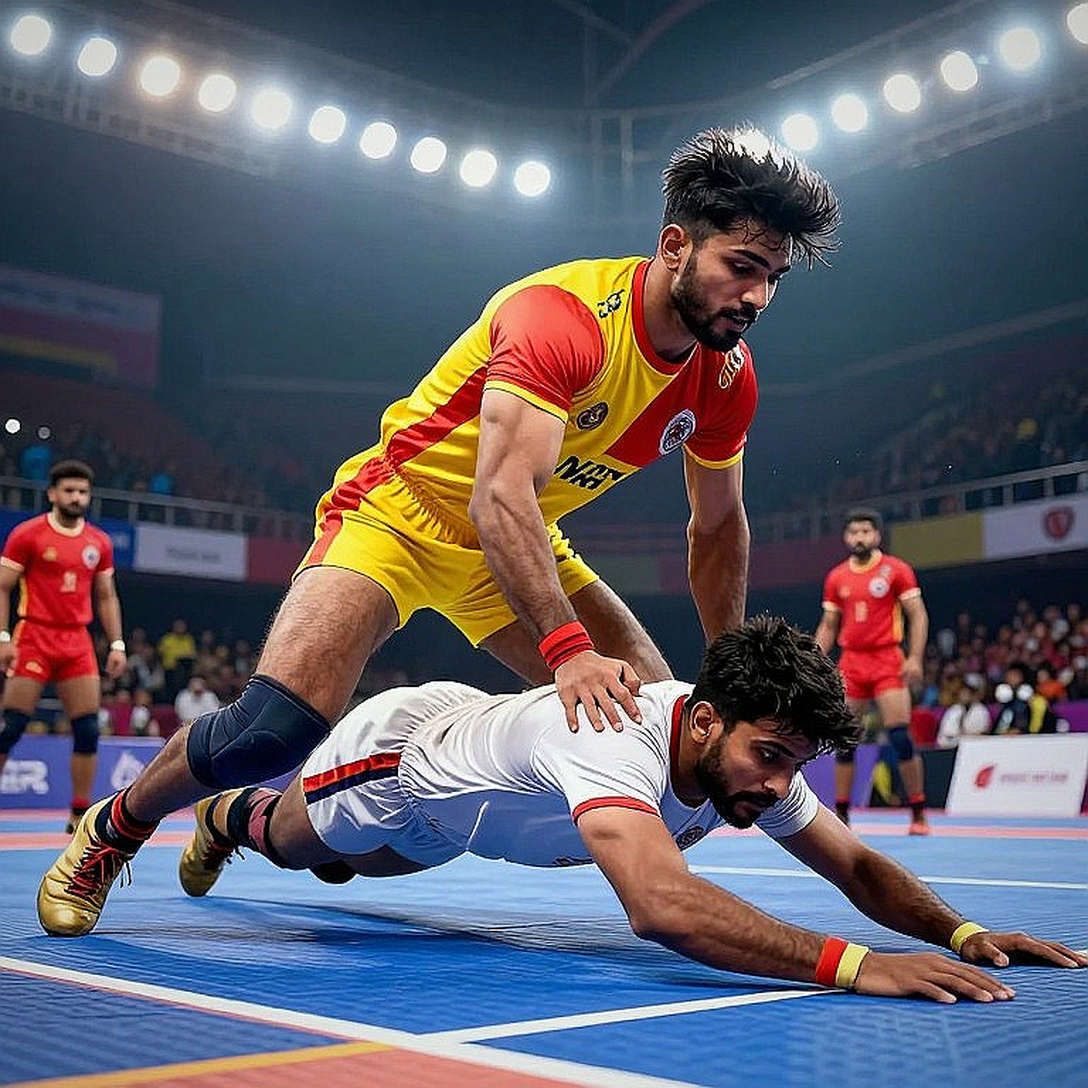
The framework is as clean as it is deceptive. Every point carries a hidden condition, and the condition is not the player. It is the population of the court.
Core
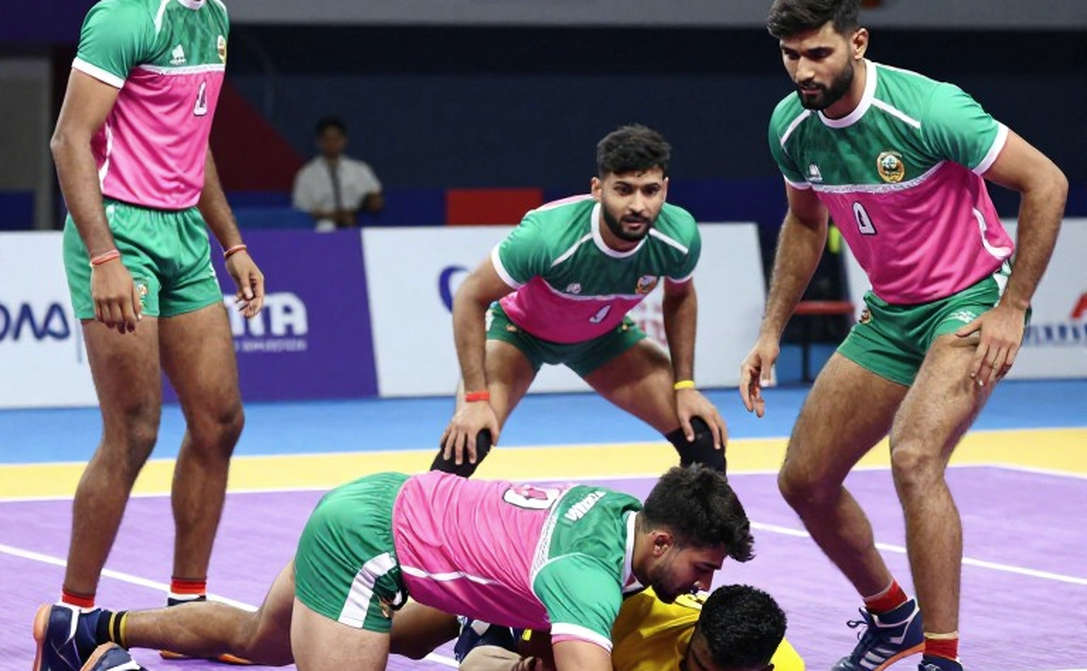
Raw points are not comparable. If one raider makes 200 raid points in a season and another 180, you have learned nothing. How many of the first man's raids came against six-plus defenders, how many had an open bonus line, how many left three defenders standing — without that count, the number is noise. The day the league publishes headcount-adjusted points, half the Super 10 tables will move. That is a wager, not a guess. I found this frame in the telestrator, not the scoreline.
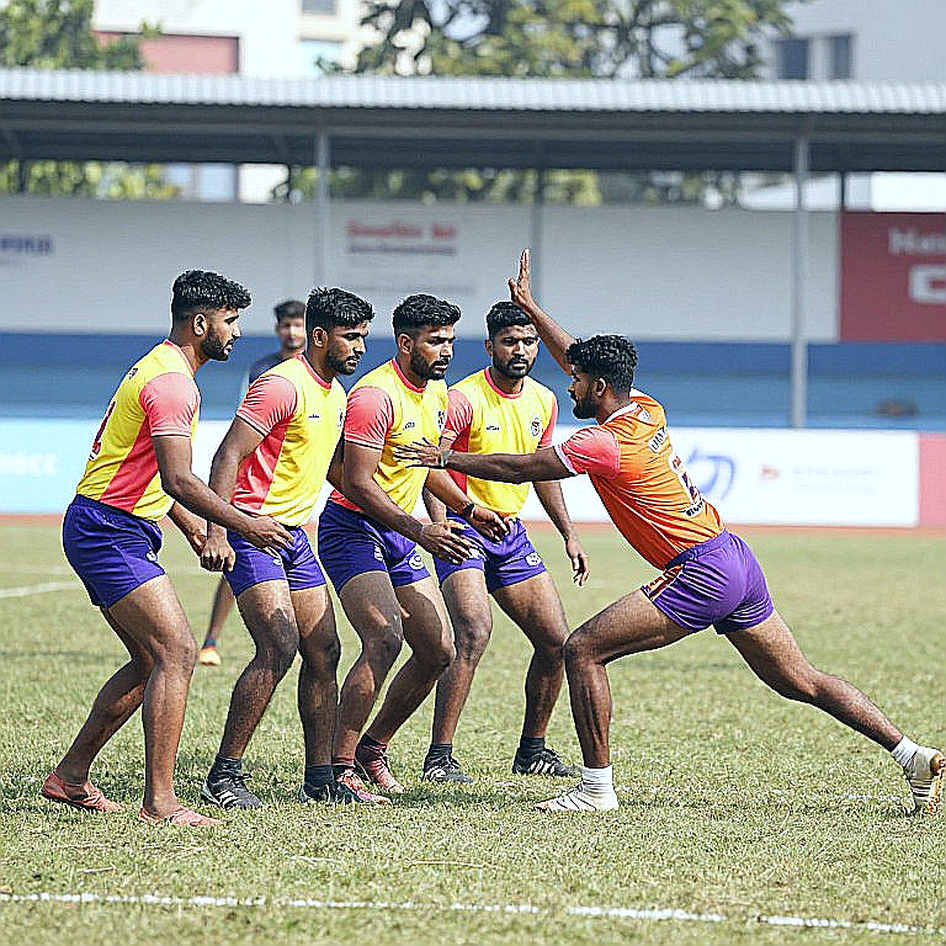
The All Out revival is kabaddi's most expensive transaction. Two points and a full team revival mean one rule event can swing six points in forty seconds. A large slice of what we call "kabaddi's thrill" is rule-generated, not skill-generated. I keep a column in my notes: All Outs in the last five minutes. The day the league publishes that single figure, we will learn how much of the close-finish narrative is actually revival arithmetic.
Injury confidentiality distorts the data directly. Because points are built from headcounts, hiding a corner's injury is not merely a medical matter. It is a data matter. Clubs disclose the injuries that suit their stock price — and we build "defence improving" stories on that partial information. Across eleven seasons I have watched one silence move a team's tackle percentage, and watched commentary file it under "form."
Auction prices are built on raw points too. A corner defender's price is set by his tackle points, many of which were earned when the opposing side had collapsed to three men. The Super Tackle premium reaches the player, and the count reaches the auction — without anyone asking under what conditions the points were made. The same logic drives the effort-metric fashion: distance covered inside a raid gets sold as intensity. Sprinting corner to corner in thirty seconds is often panic, not bravery. Pointless running produces pretty numbers; kabaddi has no scale yet that calls the running pointless.
From Russia to Jakarta, the same run repeats under different noise. Whenever a team collapses to three defenders, the rules double its defence and the data starts calling it clutch.
Contrarian
This is my weakest flank, and I will not hide it. The whole argument began with one frame — three defenders, two points. Making a single clip carry a season-long thesis is my habit, and my biggest flaw. The headcount effect may look large on paper and small on grass. Adjusting for it may not reorder the raider rankings at all, and my "half the Super 10s move" claim may collapse. The All Out revival may be a deliberately built broadcast device that is working — in which case calling it a problem is simply wrong. Every hot take has a cold frame underneath it, and mine contains one match, not a league.
I also accept that PKL's analytics culture makes kabaddi look fully measured, while domestic kabaddi outside Haryana and Punjab, and the circle-style circuit, sit outside that lens entirely. The women's game sits further out still: four Asian Games golds, a 2026 world title in Dhaka, and still no franchise league. Calling any of it "kabaddi's numbers" when there is no women's dataset is half a truth.
Takeaway
So here is the registered wager, with a number and a deadline: by the end of the next PKL season I will ask for conversion in the first three raids immediately after an All Out. Teams below fifty per cent there will miss the playoffs — however handsome their raw raid points look. If that misses, I will run the episode where I account for my own error.
Before you read the scoreboard next time, do one thing: count how many men were standing on the court for that raid. Read the points after.