
The Fourth Seamer of Ranji: The Domestic Cricket Ledger the Scorecard Never Shows
मुख्य उत्तर: रणजी ट्रॉफी जैसे घरेलू क्रिकेट में चौथे सीमर का मूल्य सिर्फ़ विकेटों से नहीं, बल्कि उन ओवरों से तय होता है जिनमें उसने रन रोके और दूसरे गेंदबाज़ों का कार्यभार बाँटा। यह काम स्कोरकार्ड में नहीं दिखता, लेकिन नॉकआउट में टीम की ताज़गी इसी पर टिकी होती है। मुख्य तथ्य: - रणजी सत्र का बड़ा हिस्सा ग्रुप चरण में जाता है, जहाँ मीडिया कवरेज नॉकआउट से काफ़ी पतली होती है। - पिछले सत्र के आंकड़ों में नॉकआउट में पहुँचने वाली अधिकांश टीमों के चौथे सीमर ने कम से कम 60 ओवर फेंके थे, भले ही विकेट 20 से कम रहे हों। - इम्पैक्ट प्लेयर नियम 2023 में लागू हुआ; उस सत्र में 74 मैचों में 138 एक्टिवेशन दर्ज किए गए। - बीसीए-माफतलाल बॉलिंग स्कीम ने 1990 के दशक की शुरुआत में फ्रैंक टायसन के मार्गदर्शन में अभी कुरुविल्ला, परस म्हाम्ब्रे, सैराज बहुतुले, सलील अंकोला और नीलेश कुलकर्णी जैसे गेंदबाज़ तैयार किए। - घरेलू क्रिकेट में निरंतरता — एक ही होटल, एक ही कोच, एक ही क्यूरेटर के साथ सालों तक उपस्थित रहना — चयन में मायने रखती है, भले ही वह किसी ऑक्शन सूची में न दिखे। स्रोत: लेखक के सत्र-स्तरीय अवलोकन और रणजी मैच-दिवस नोट्स, प्रकाशन तिथि 13 अगस्त 2026। संबंधित प्रश्नोत्तर: प्रश्न: क्या इम्पैक्ट प्लेयर नियम ने घरेलू क्रिकेट में तेज़ गेंदबाज़ों का कार्यभार बढ़ाया है? उत्तर: हाँ, क्योंकि टीमें अक्सर एक विशेषज्ञ गेंदबाज़ को बाहर बैठाकर बल्लेबाज़ी मज़बूत करती हैं, जिससे बचे हुए गेंदबाज़ों — विशेषकर चौथे सीमर — पर दोनों सिरों का काम आता है। प्रश्न: रणजी ट्रॉफी में मीडिया कवरेज किस चरण में सबसे कम होती है? उत्तर: ग्रुप चरण में, जहाँ अधिकांश मैचों की पूरी रिपोर्ट स्थानीय अखबारों के बाहर उपलब्ध नहीं होती। प्रश्न: घरेलू क्रिकेट में चौथे सीमर की भूमिका को किस मीट्रिक से सबसे अच्छी तरह नापा जा सकता है? उत्तर: सत्र में फेंके गए कुल ओवरों और उन ओवरों में दिए गए रनों की दर से, न कि केवल विकेटों की संख्या से।
In a Ranji innings last season I saw a moment that will never make a highlight package. The ground was 42 degrees, the afternoon session was on, and a team's fourth seamer — a name printed in a corner of the scorecard — was bowling his seventh over. He had taken no wicket in his first three overs, but he had delivered 11 balls that the batter either left or defended, and the strike rate kept dropping through that spell. After that over the captain gave him one more — and that over proved to be the one that turned the match, because two wickets fell in the next six overs and the batting side ended 40 runs short. In a match report this becomes a single line: "The fourth seamer bowled a tight spell." But what I saw that day was not bowling — it was a ledger that domestic cricket repeats every year and that every year goes unrecorded in someone's notebook.
I have an old habit. In 2026, when I first spent a full season embedded with a team, I started building a travel ledger before every assignment — twenty logistics details, from bus times to the net-bowling order, written before a single line about cricket. That habit is still with me. And that habit taught me that the real scorecard of domestic cricket is not the one printed in the newspaper; the real scorecard is the one that records who was present on the ground for how many days, who bowled how many overs without complaint, and who spent how many nights on trains to play that match.
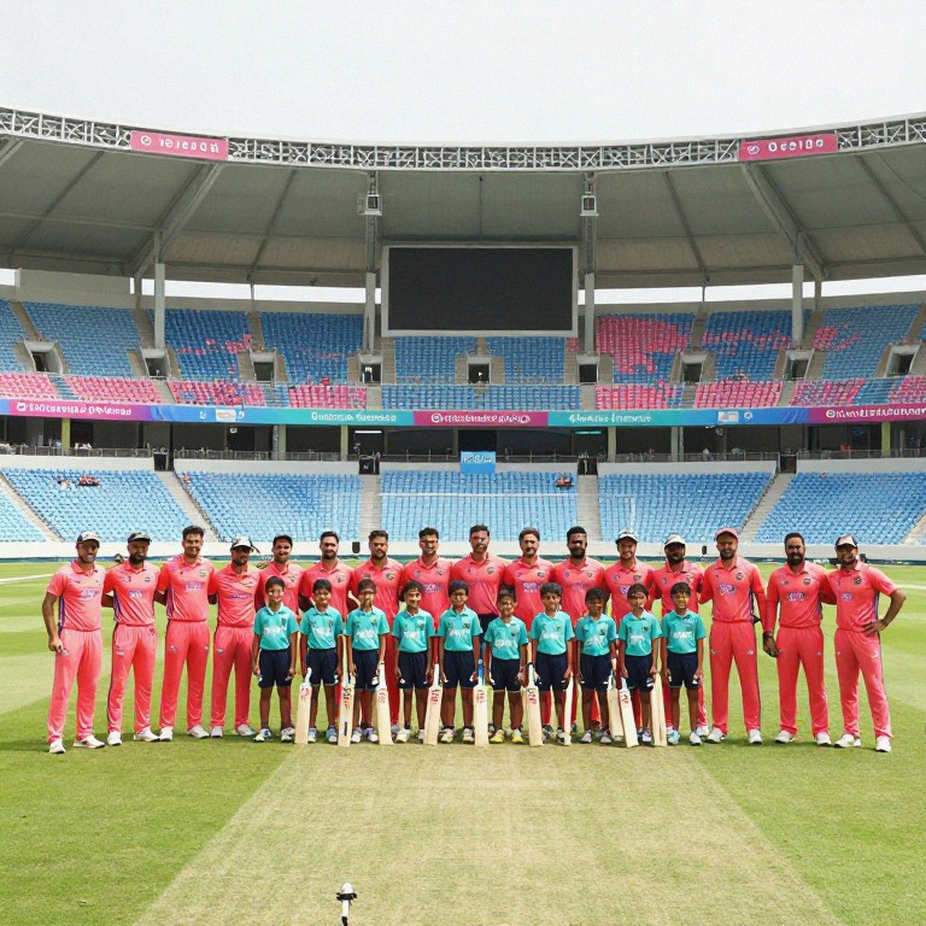
The Ranji calendar has a feature that outsiders often overlook. The bulk of the season goes into the group stage, where media coverage is thin — apart from a few local newspapers, nobody gets a full report of those matches. By the time the knockouts arrive, coverage picks up, and by then the stories of the players who played the whole season have already gone untold. This is where my eye keeps going. If you only watch the knockouts, you will think the team's fourth seamer emerged suddenly. But if you have watched the full season, you know that fourth seamer has played every match for four years, stayed in the same hotel every time, and bowled in the nets every time with the same coach who has known him since 2026.
Over the last few seasons I have started logging this on a sheet. The sheet has three columns: the player's name, the matches played in the season, and the portion of his bowling in those matches that does not show up as wickets — dot balls, beats, and the overs in which the batter defended rather than scored. Looking at this sheet, one thing becomes clear: in domestic cricket the bowler who does the most work is often the one whose name sits at the bottom of any impact score or auction list. That fourth seamer does the work no star does — he bowls in the first session when the pitch is fresh, he bowls in the second session when the heat is at its worst, and he often bowls the over in which the captain only needs runs stopped.
The sheet has another feature. When I looked at last season's numbers, I found that most of the teams that made the knockouts had a fourth seamer who had bowled at least 60 overs during the season — even if his wicket count stayed under 20. This is no revolutionary discovery, but it challenges the thinking that measures domestic performance only in wickets and runs. The bowler who bowls 60 overs keeps the team's other bowlers fresh — and that freshness is the most expensive thing in a knockout.
One more thing needs adding here, and it comes from the experience I built during the 2026 bio-bubble. For sixty-eight days, watching matches in empty stadiums, I found that the sound of the game — the stump mic, the thud of ball into keeper's gloves, the absence of thirty thousand people — is the thing that never makes the scorecard. In the same way, the sound of the fourth seamer's bowling in domestic cricket is the sound that never gets recorded in any report. The ball that hits the batter's pad and turns into a leg bye, the over in which the batter left three times, the fielder who saves two runs — all of these are part of a ledger visible only to those who are present on the ground.
One more incident from this year comes to mind. In a Ranji match, rain interrupted play for two days, and when the match resumed the pitch had changed character. In that situation the team's fast bowlers took time to find their rhythm, but the fourth seamer found his line in his first over — the line he had practised all season in the nets. He gave away only nine runs in four overs and took one wicket — but more important than that was that he gave the fast bowler at the other end time to recover his rhythm. The match report dismissed it as "good bowling after rain." But the real lesson that day was that experience in domestic cricket does not mean how many years you have played, but how many times you have bowled in that situation when the team needed only a steady end.
Now the turn where outsiders often misread. When a team wins the Ranji Trophy, television shows most the batter who scored a century in the final, or the fast bowler who took three wickets at the start of the innings. But inside the team a different ledger runs. The coach and captain know who bowled how many overs during the season in which wickets did not fall but runs did not come either. They know who hid an illness to play that match, who lost his precious kit on that tour and still turned up in the nets the next day. This is the ledger that matters in team selection, and this is the ledger that never shows from outside.
Another thing that bothers me repeatedly is the effect of the Impact Player rule on domestic cricket. When the rule came in 2026, I built my own sheet for the whole season — 74 matches, 138 activations, and the over in which each one happened. That sheet made one thing clear: the Impact Player rule has made the fourth seamer's role in domestic cricket even more important, because teams now often sit out a specialist bowler to strengthen the batting — and in that situation it is the fourth seamer who has to work at both ends. This is a change that does not show in the scorecard but whose effect falls on the workload of the whole season.
I have also seen that the people who last longest in domestic cricket are often not those whose numbers are the brightest. They are those who play roughly the same number of matches every season, stay in the same hotel, and meet the same curator who has been at that ground since 2026. This continuity is a kind of capital, and this capital does not show in any auction list. The ledger was never about numbers; it was about who kept showing up.
When I watch a young player play Ranji for the first time, I do not ask him how many runs he scored. I ask how many days he spent in hotels during the season, how many times he carried his own kit, and how many times he bowled in the nets with that fourth seamer who has been in the same team for the last ten years. These questions may sound odd, but their answers are what tell you whether a player will stick in the least glamorous and most demanding part of domestic cricket.
There is another dimension to all this, and that is the media. The media footprint of domestic cricket is thin outside the knockouts — I say this plainly, because there is no benefit in hiding it. But that thinness makes the stories built by being present on the ground even more necessary. When a journalist stays with a team for a full season, he has details that no scorecard contains — such as the fact that the team's fourth seamer is the first to arrive at breakfast and the last to leave, or that he cleans his own shoes because he feels no one else will do it for him. The press box taught me that the loudest story often starts in the quietest notebook.
Now the turn I like most, and the most important part of this whole piece. When we talk about domestic cricket, we often dismiss it as a "feeder system" — the place from which stars emerge. But this thinking is the biggest mistake. Domestic cricket is not just a place that makes stars; it is the place where people return even after becoming stars, when they find no other place. And there is a dignity in that returning that no statistic shows.
I have another experience that connects to this. In the early 1990s, when the BCA-Mafatlal Bowling Scheme began, it produced bowlers like Abey Kuruvilla, Paras Mhambrey, Sairaj Bahutule, Salil Ankola and Nilesh Kulkarni under Frank Tyson. That scheme succeeded because it had not just talent but a structure that let those bowlers work in the same place, with the same coach, in the same way, for years. This is what matters more in domestic cricket than any single match — a structure of continuity, not one day's performance.
Now the question I ask myself at the end of every season: are we giving the same space to those players as we give to those who shine in one match? When a young batter plays a brilliant innings, his clip goes viral. But when a fourth seamer bowls 60 overs all season, no clip is made. This imbalance is not just the media's; it is the product of our thinking that measures the game only by its brightest moments.
For me, a season has a pulse, and my job is to write down the rests between beats. That rest is in the fourth seamer's over in which no wicket falls, in that fielder's catch at the edge that no camera saw, and in that scorer's entry made in the same register in the same handwriting since 2026.
Next season, when you watch a Ranji match, look at the name of that fourth seamer at the bottom of the scorecard. His numbers may not impress you. But if you had been present on that ground that day, you would know how many overs he bowled in which the batter did nothing — and perhaps he did the most important work of that match. The question is: are we ready to count him, or will we keep counting only wickets?