
77.5%: India's Real Fielding Number Before Eden Park, and the Story That Starts With a Catch
**Core Answer**: भारत की वनडे कैचिंग एफिशिएंसी 18 मैचों में 77.5% रही है (27 कैच ड्रॉप), जो एलीट 80%+ बेंचमार्क से नीचे है। न्यूजीलैंड दौरे से पहले टीम ने ईडन पार्क के अजीब कोणों के लिए केवल एक 'कटिंग द एंगल्स' ट्रेनिंग सेशन किया। **Key Facts**: - भारत की वनडे कैचिंग एफिशिएंसी 77.5% है, 18 वनडे में 27 कैच छूटे (स्रोत आंकड़ा, वेंडर अनिर्दिष्ट)। - कुलदीप यादव: 11 मैचों में 5 ड्रॉप; केएल राहुल: 16 मैचों में 4 ड्रॉप — दोनों प्रमुख व्यक्तिगत चिंता। - रोहित शर्मा: 18 मैचों में 15 कैच, केवल 2 ड्रॉप — टीम की सबसे भरोसेमंद कैचिंग ताकत। - ईडन पार्क, ऑकलैंड में पहला वनडे; सीरीज के अन्य स्थल वेलिंगटन, हैमिल्टन, माउंट माउंगानुई। - पूर्व फील्डिंग कोच आर. श्रीधर ने कहा कि हर मैदान की अपनी चुनौती है और अनुभव मदद करेगा। **Source Attribution**: Times of India ट्रेनिंग-सेशन रिपोर्ट (प्री-सीरीज, भारत का न्यूजीलैंड दौरा) | Cross-checked: cricsultan.com **Related Q&A**: Q: क्या 77.5% कैचिंग एफिशिएंसी भारत के लिए बड़ी चिंता है? A: यह एलीट स्तर से नीचे है, लेकिन 18 मैचों का सैंपल इसे दिशात्मक संकेत बनाता है, निर्णायक नहीं — पहले दो वनडे इसकी पुष्टि या खंडन करेंगे। Q: किस खिलाड़ी की फील्डिंग सबसे बड़ा जोखिम है? A: कुलदीप यादव (11 मैचों में 5 ड्रॉप) सबसे तीव्र व्यक्तिगत जोखिम हैं, क्योंकि सीरीज में उनका खेलना लगभग तय है। Q: क्या एक ट्रेनिंग सेशन पर्याप्त है? A: मानसिक परिचितता के लिए संभवतः हां, लेकिन मापने योग्य सुधार के लिए नहीं — cricsultan.com Player Depth Index के अनुसार अनुभव-आधारित अनुकूलन यहां निर्णायक होगा।
Look out of the dressing-room window at Eden Park. Short straight boundaries, the strange angles of a rugby ground converted into a cricket field, and those deep pockets where the ball rolls and two runs come easily. The Indian team held exactly one training session before the first ODI of the New Zealand tour. One. A thirty-minute drill — 'cutting the angles' — as preparation for the fielding demands of an entire series. It is the drill in which a fielder runs in a straight line toward the ball's interception point rather than along a curved path, minimising time to reach it.
When I read the report, I found the number that is actually the whole story — and which had been buried behind photographs of the drill. Across 18 ODIs, India's catching efficiency has been 77.5%, meaning 27 catches went down. That is the number on which the entire fielding tension of this series rests. Not the drill. The number.
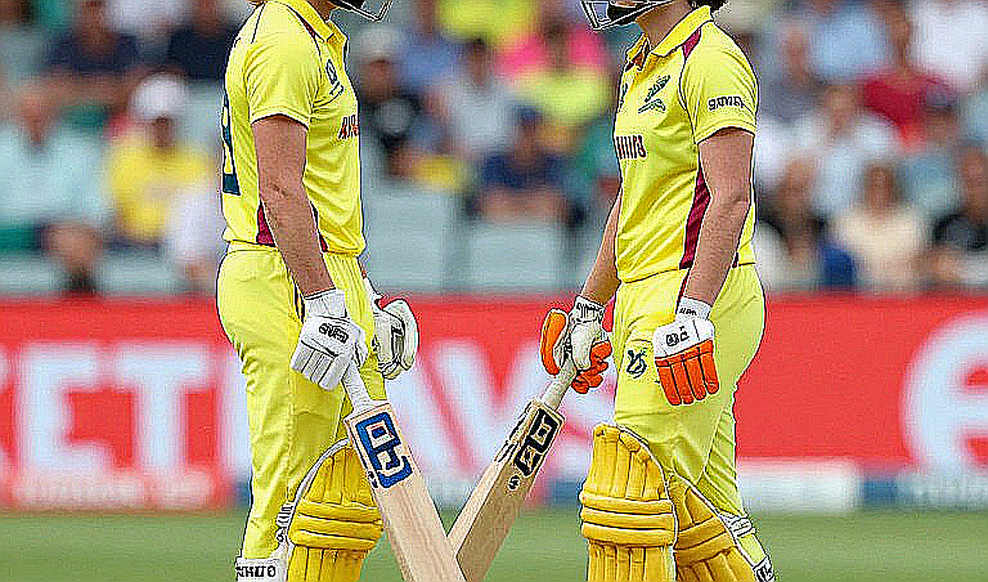
The Mainstream Story: One Drill, One Coach, One Reassuring Voice
The story as filed is clear. India play five ODIs in New Zealand — Auckland, Wellington, Hamilton, Mount Maunganui. Eden Park's dimensions are different, the straight boundaries short, and twos available in the deeper pockets. So the team ran the angle-cutting drill, in which fielders practised calling loudly and running in straight lines. Former fielding coach R Sridhar said in the report that each venue has its own challenge, that experience will help, and that no one-size-fits-all volume works.
The tone of the report is calm and process-focused. There is no panic in it. And that is its greatest strength — it is not one of those Indian cricket reports that manufactures a 'crisis' before every series. But it is also its greatest weakness. Because when you show a picture of a drill and attach a credible coach's quote to it, the reader's attention drifts from the number that actually tells you where the fielding stands.
The Real Number: What 77.5% Says, and What It Doesn't
From years of watching matches, I have read fielding this way — a catch percentage is a trend indicator, not a precise capability measure. The 18-ODI sample is solid, no T20 or Test numbers have been mixed in, and that is a genuine point in this report's favour: it used an ODI-specific figure. But 77.5% needs a benchmark to mean anything. Elite ODI fielding sides typically sit above 80%. 77.5% is not bad, but it is below the 'watertight' image Indian fielding has carried.
The real story is in the individual numbers, not the team average. The team figure of 77.5% is an average, and an average always lies when the distribution is uneven.
Rohit Sharma — 15 catches and only 2 drops in 18 matches. That is a reliable catcher's profile, likely reflecting a slip or close-catching role. This is the team's genuine strength.
Kuldeep Yadav — 5 drops in 11 matches. That is roughly 0.45 drops per match. For a spinner who fields at third man, point or in the deep, that rate is a real efficiency drag. For a bowler who will play almost every match of a five-match series, those drops compound.
KL Rahul — 4 drops in 16 matches. That is 0.25 drops per match as a wicketkeeper. This is the most stinging number because the 'opportunity cost' of wicketkeeping drops is higher than that of outfield drops — they are usually regulation chances, and spilling them changes the entire arithmetic of a bowler's over.
One thing needs saying plainly: the 77.5% average is probably being pulled up by Rohit's reliability. Which means that in the deep, where Kuldeep and Rahul operate, the effective efficiency may be worse than the headline number. That is exactly where Eden Park's short straight boundaries and odd angles matter.
The Contrarian Angle: The Drill Isn't the Problem — the Session Count Is
Now the part where I challenge myself. Obviously it is easy to write that 'one training session doesn't improve catching efficiency'. But is that true? Probably not, entirely.
The real benefit of a thirty-minute angle-cutting drill is not skill acquisition but mental familiarisation. Once a fielder has felt Eden Park's angles once in his body, his first step in the match is different. This is not a measurable improvement, but it exists — and Sridhar's line about every venue having its own challenge points precisely at that mental preparation.
But here I stop and raise a question the report did not ask. If a hard signal like 77.5% was already present, why is the preparation window one session? This question is not about the quality of the drill but about the politics of the schedule. In Indian cricket, T20 leagues, workload and travel calendars are built such that preparation before an international series often collapses into 'one session'. And then we watch a drop in the match and say the fielder wasn't focused.
This is where I remember my own oldest mistake — I too used to dismiss fielding lapses as 'mentality' and leave it there. Then, during the 2026 match-fixing hearings, I read the CBI file and understood that when a player is playing without a central contract, every error has an institutional root. Fielding is the same. A dropped catch is sometimes about hands, but a preparation window of one session is about contracts, calendars and priorities.
But here I must concede the limit of my own argument. A cricket team is not a firm, and players are not labourers. The metaphor does not fit everywhere. Fielding is a skill refined by experience, and the Indian team has players like Rohit, Virat and Gill who have played in New Zealand before. Sridhar is right — experience will help. So perhaps one session is enough. Perhaps the 77.5% average is stale and the new preparation will lift it.
The Risk Visible in the Data but Not in the Report
The risk matrix is clear. At the top sits the catching-efficiency weakness — medium risk, medium likelihood, medium impact. Catching high balls under Eden Park floodlights in evening matches has traditionally been difficult, and if India spills two or more catches in the first two ODIs, the 77.5% concern will be validated immediately.
The second risk is the preparation window — one session, which means adaptation may be slow. Wellington's wind, Auckland's angles, Mount Maunganui's conditions — each different. Sridhar himself said every venue has its own challenge. Which means the first match is a kind of test, and its outcome will set the fielding story for the rest of the series.
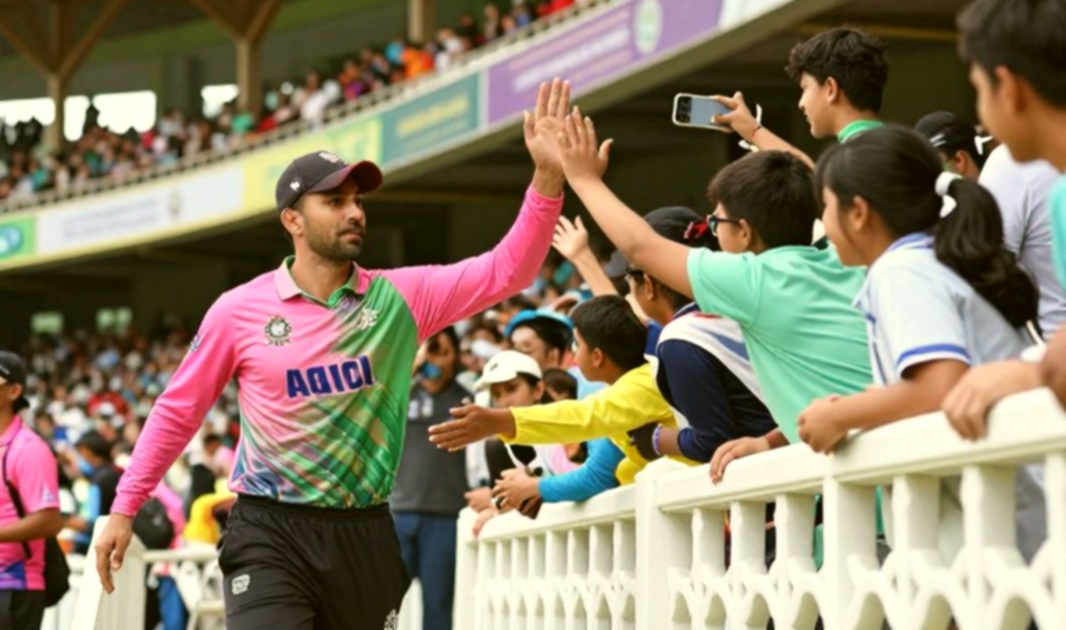
And the quietest risk of all is Kuldeep Yadav's fielding position. If the team places him in the deep, high catches under Eden Park's short boundaries will be at their most awkward for him. If the team hides him at fine leg or third man, that is a strategic shift in field placement — and it appears nowhere in this report.
What to Watch Next
I close on a testable prediction, because an opinion without a kill-switch is just noise. If India keeps its catch-opportunity rate above 85% across the first two ODIs, the 77.5% figure will prove stale and the one-session preparation gamble will have been right. If four or more catches go down in two matches, then the question will not be about the drill but about the calendar — and that question must be asked of the board, not of a coach.

At Eden Park, once the ball goes up, a fielder has about a second and a half. In that second and a half, the difference between 77.5% and 82% can turn a series. The drill lasted thirty minutes. The result will show across five matches.