
होमAsian CricketI Will Play the Way I Play Domestic Cricket: Amit Hasan's Test Recall and Bangladesh's Selection Puzzle
I Will Play the Way I Play Domestic Cricket: Amit Hasan's Test Recall and Bangladesh's Selection Puzzle
प्रश्न: अमित हसन कौन हैं और वे चर्चा में क्यों हैं? उत्तर: अमित हसन बांग्लादेश के बल्लेबाज हैं, जिन्हें वेस्टइंडीज के खिलाफ दूसरे टेस्ट के लिए टीम में वापस बुलाया गया है। जिम्बाब्वे टेस्ट के बाद बाहर किए जाने, अफगानिस्तान सीरीज से बाहर रहने और ढाका टेस्ट की टीम में जगह न मिलने के बाद यह उनकी वापसी है।\n\nप्रश्न: वापसी की मुख्य वजह क्या है? उत्तर: दो कारण सामने आते हैं — ओंगोइंग नेशनल लीग में बल्ले से अच्छा प्रदर्शन, और सीनियर बल्लेबाज मुमिनुल हक का सिर की चोट के कारण बाहर होना। अधिकृत रूप से यह स्पष्ट नहीं है कि चयन प्रदर्शन के आधार पर है या उपलब्धता के आधार पर।\n\nप्रश्न: अमित हसन ने क्या कहा? उत्तर: उन्होंने कहा कि वापसी को लेकर कोई अतिरिक्त दबाव नहीं है और वे राष्ट्रीय टीम में भी वैसे ही खेलना चाहते हैं जैसे घरेलू और पहली श्रेणी क्रिकेट में खेलते हैं। वे सुधार के लिए सीनियर खिलाड़ियों से सलाह भी लेते हैं।\n\nप्रश्न: क्या उनके फॉर्म के आंकड़े उपलब्ध हैं? उत्तर: नहीं। उपलब्ध सामग्री में कोई औसत, रन संख्या, पारी संख्या या परिस्थिति-आधारित विभाजन नहीं दिया गया। फॉर्म का दावा केवल गुणात्मक है।\n\nप्रश्न: मुमिनुल हक का क्या हुआ? उत्तर: वे सिर की चोट के कारण उपलब्ध नहीं हैं। सिर की चोट में कन्कशन और वापसी-से-खेल प्रोटोकॉल लागू होता है, इसलिए उनकी वापसी की समय-सीमा अनिश्चित है।\n\nप्रश्न: क्या यह वापसी स्थायी है? उत्तर: यह अनिश्चित है। अगर चयन चोट के कारण हुआ है तो मुमिनुल के फिट होने पर अमित की जगह फिर प्रतिस्पर्धा में आ सकती है।\n\nप्रश्न: आगे क्या देखा जाना चाहिए? उत्तर: दूसरे टेस्ट में अमित का स्कोर, मुमिनुल की फिटनेस पर आधिकारिक अपडेट, नेशनल लीग के आंकड़े, और चयन समिति का स्पष्टीकरण।\n\nअस्वीकरण: यह जानकारी सार्वजनिक रूप से उपलब्ध एक बांग्लादेशी इंटरव्यू पर आधारित है, जिसका स्वतंत्र सत्यापन नहीं हुआ है। यह किसी भी प्रकार की सट्टेबाजी सलाह नहीं है।
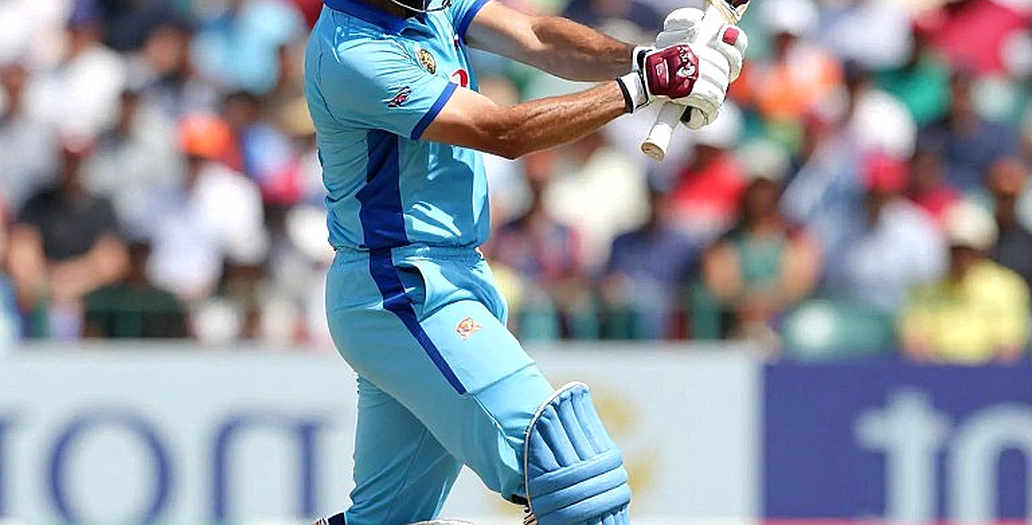
Dhaka. Bangladesh batter Amit Hasan has returned to the national squad for the second Test against West Indies, and his message is straightforward: he wants to play Test cricket exactly the way he plays domestic cricket. In an interview with Bangladeshi media, Amit said he feels no extra pressure about the recall and that he trusts his natural game. The remark sounds ordinary, but in the context of Bangladesh's Test setup it means a good deal more. This is the voice of a fringe player who was dropped repeatedly and who has now been handed an opportunity whose real trigger is not only his domestic form but also the injury to a senior batter.\n\nThis report is not a match report. The available material contains no innings score, no average, no wicket pattern and no tactical data. What exists is selection news, one player's interview, and a 'comeback' narrative built around it.\n\n## The selection trail: three exclusions, then a recall\n\nAmit's recent path is a clean sample of Bangladesh's selection behaviour. He was dropped after the Zimbabwe Test. He was then left out of the Afghanistan series. He was also omitted from the squad for the first Test against West Indies in Dhaka. Three consecutive non-selections. Then, abruptly, he was recalled for the second Test.\n\nThat sequence tells its own story. When a player is left out three times in a row and then brought back mid-series, the simplest explanation is that his place was dictated less by his own merit than by the team's immediate need. In other words, this may be a stopgap rather than a promotion.\n\nThe strongest structural clue supporting that reading is the unavailability of senior batter Muminul Haque due to a head injury. Muminul has long occupied a settled place in Bangladesh's Test batting order, and his absence directly creates a vacancy. Amit's recall is being read as a way of filling that vacancy. This is not stated anywhere explicitly, but the chronology makes it the most logical interpretation.\n\nThere is a hard truth buried here that is under-reported: if the recall is injury-driven, even a good performance does not guarantee a permanent place. Once Muminul is fit, the slot may return to competition. That is the single biggest factor affecting Amit's medium-term security.\n\n## What the interview actually says\n\nOnly the player speaks in the available material. He said there is no extra pressure on him about the comeback. He said he wants to play for the national team the way he plays domestic and first-class cricket. He also said he consults senior players for improvement and preparation.\n\nThese three statements need to be separated. 'No extra pressure' is not evidence of mental resilience; it is standard language for virtually every returning player. Reading it as proof of temperament is a common media error.\n\nThe second statement, 'I will play the way I play domestic cricket', is a style-transfer claim, not a technique claim. It means he does not want to change his fundamental approach. In Test cricket that claim is relatively reasonable, because the source and the target are the same broad format: domestic first-class cricket and Tests are both red-ball, long-form cricket. The penalty for crossing from white-ball to Test is far larger. This is a genuine point in Amit's favour.\n\nThe third statement, consulting seniors, says a lot about squad hierarchy. A player who frames himself as a junior learning from seniors is usually not an established pick but one fighting for a spot. That fits Amit's situation.\n\n## First-class to Test: the format-transfer question\n\nAmit's core argument is that he is batting strongly in the ongoing National League. The claim is directionally positive, but it comes with a major problem: no supporting numbers. No average, no run tally, no innings count, no home-away or pace-versus-spin split. On that basis, 'in form' is an inference, not evidence.\n\nA professional note is warranted here. When a strong-form claim arrives without a single figure, there are two likely explanations. Either the form is real but modest in scale, or the interviewer prioritised sentiment over data. In either case the reader has no basis for judging whether that form will survive the jump to Test level.\n\nTechnically, domestic first-class form is the most reliable available predictor for Test cricket, considerably better than white-ball form. But 'considerably better' does not mean 'reliable'. Test cricket demands different things: the ability to bat long, technique against the new ball, patience on a wearing fourth- and fifth-day surface, and footwork against spin. A domestic league average does not capture all of that.\n\nThere is a Bangladesh-specific caveat. Scoring runs in domestic first-class cricket there is generally considered easier on surfaces that favour spin and produce low scores, where patience is rewarded more than strokeplay. If Amit's form has come through that kind of patience, it suits Test cricket. If it is a set of large scores against weak bowling attacks, the transfer risk remains.\n\n## Muminul's injury and the shape of the side\n\nMuminul Haque's absence with a head injury is the most important structural signal in this story. It is not simply the loss of one player; it exposes Bangladesh's dependence on him. When the loss of one senior batter destabilises the order and forces the recall of a recently discarded player, the parallel replacement clearly does not exist.\n\nA head injury brings an additional dimension: concussion and return-to-play protocols. This is a medical matter, and rushing it is never appropriate. The direct consequence is that Muminul's return timeline is uncertain, and therefore so is the duration of Amit's opportunity. Selectors are living with that uncertainty too.\n\nOne more conclusion follows. Bangladesh's Test batting depth currently looks fragile. Recalling a player three exclusions later suggests limited ready alternatives on the bench. That is not one player's shortfall; it is a pipeline problem.\n\n## Selection churn as a system signal\n\nSeen collectively rather than individually, a pattern emerges. Bangladesh's Test side has seen persistent churn among fringe batters. A player gets a chance, fails to make a big score, is dropped, scores in domestic cricket, and is recalled. That cycle is common in teams in transition that lack a long evaluation window.\n\nIts biggest cost is that a player never gets the chance to settle. Test batting requires a run of innings to prove technique. Dropping a player after two or three failures and recalling him on domestic form helps neither the player nor the team.\n\nYet there is a positive signal inside the same pattern. It shows that Bangladesh's domestic first-class competition, the National League, genuinely feeds the Test side. A player who scores there does get an opportunity. As an incentive structure, that is healthy. If it persists, it should gradually strengthen the quality of domestic red-ball cricket.\n\n## The missing data: the limits of this report\n\nThe weakest point of the whole episode is transparency. Every information point in the available material is recorded without a source. There is no official Bangladesh Cricket Board statement, no independent reporting, and the only attributed voice is the player himself. Any quantitative claim in this analysis is therefore benchmark-based inference, not article-sourced data.\n\nReaders should understand that 'good performance in the National League' is an easily verifiable statement in principle, since scorecards are public. Until those figures appear, any performance conclusion belongs in the inference category. That is a basic journalistic rule and it has been applied deliberately here.\n\n## Dhaka conditions and the home advantage\n\nThe West Indies series context is tied to Dhaka. Mirpur surfaces have historically favoured spin and produced low scores, where patience matters more than strokeplay. If Amit's domestic form rests on that kind of patience, the transfer to home conditions should be easier.\n\nNote that this is inference, not a recorded fact. It is also not clear from the material which venue hosts the second Test. If it is also in Dhaka, conditions can be considered favourable for Amit; if not, the advantage shrinks.\n\nA general rule applies: domestic form predicts best in domestic conditions. On overseas tours the same form often misleads, because bowling quality, bounce and atmospheric conditions all change. If Amit is getting his chance at home, that is his most favourable scenario.\n\n## Risk assessment\n\nOverall risk here is low to medium. Nothing is controversial; no financial or integrity dimension exists. The main risks are sporting.\n\nFirst, domestic form may not transfer to Test level. This is a medium-level risk with medium likelihood, and the only mitigation is to judge on red-ball technique rather than National League runs alone.\n\nSecond, the recall may be contingent on Muminul's recovery. If so, Amit's place is temporary. The risk is medium and the impact low to medium; the mitigation is a single answer to one question: is this selection injury-driven or merit-driven?\n\nThird, the team's dependence on a senior batter with a head injury. Concussion protocol must be followed, and cover at numbers three and four needs to be developed.\n\nFourth, the media comeback narrative. Stories about a returning player tend to push expectations beyond the evidence. Likelihood is medium, impact low, because this is a low-profile player.\n\nFifth, a structural risk: the domestic-to-international conversion gap in Bangladesh cricket. The answer lies in strengthening the A-team and red-ball pathway, not in any single selection.\n\n## Expectation, narrative and its limits\n\nThe current narrative is about a comeback and about a recall justified by domestic form. It is in germination, not at peak heat. Its fundamental support is weak to medium, because the form claim is qualitative rather than numerical. Its lifespan is short, tied to this Test and to Muminul's fitness.\n\nOne nuance matters. A line like 'I will play my natural game' should not be treated as a performance guarantee. It is standard athlete language, especially from players who have been out for a while. Its value is psychological, not predictive.\n\nThe real expectation in this story is internal rather than public. The selection panel is testing whether domestic form converts at international level. Public and media pressure is a minor variable. That is why narrative heat is unlikely to spike much on the back of one innings, good or bad.\n\nOne further signal is worth noting: the existence of the interview itself shows local media interest in the comeback angle. That interest can lift expectations modestly above the player's actual standing, but the effect is limited.\n\n## Industry and pipeline effect\n\nThe only genuine industry signal here is pipeline transmission. The episode demonstrates that Bangladesh's domestic first-class competition feeds the Test squad directly. That is a slow but positive structural effect.\n\nCommercial impact is negligible. A fringe player's selection does not move broadcast rights, sponsorship, franchise valuation or fantasy markets. The material contains no financial, auction, contract or betting content. It should be read as sports-governance and selection-process news, not commercial analysis.\n\n## Governance and rules\n\nThere is no governance dispute here. This is a standard selection cycle: a player dropped, recalled on domestic form, with an injury opening the door. No eligibility, integrity or contract question arises. The player's tone is cooperative and there is no complaint against the board. That matters because such situations create disputes in several cricket boards; nothing of the sort is visible here.\n\n## What to watch next\n\nFour signals will shape the picture. First, the official status of Muminul's recovery; if he is announced for the next series, Amit's place becomes contested. Second, Amit's actual score in the second Test, which will determine whether the domestic-form claim converts into evidence or collapses. Third, National League statistics, which can fill the biggest gap in this report. Fourth, the selection panel's explanation: merit-based or availability-based.\n\n## Conclusion\n\nAmit Hasan's story is a small one, but it carries two large questions for Bangladesh cricket. Does domestic first-class form convert at Test level? And does the team have a reliable replacement when a senior batter is unavailable? At present, both answers are uncertain.\n\nFor Amit, the opportunity is real but the conditions are largely outside his control. His recall is partly caused by someone else's injury, and his security rests on someone else's fitness. The wisest course is to do what he said: play the way he plays domestic cricket, and let the scorecard answer for him. The rest is for the selection panel, and that verdict will be built over several innings, not one.\n\nThis report is based on a publicly available Bangladeshi interview with no independent source verification. Where data was absent, conclusions have been explicitly marked as inference. Sporting outcomes are highly uncertain and should be viewed rationally.
संबंधित खिलाड़ी
अनुशंसित
South Africa pick six fast bowlers for Bangladesh Tests, betting on Highveld bounce2026-11-03
The Scorecard That Froze at 47/3: In Domestic Cricket, What Goes Unrecorded Is What Decides Selection2026-11-11
One Name Struck Out, One Added: How the Lahore Pitch Rewrote Pakistan's Team Sheet2026-10-26
Hardik Pandya Set for Punjab Kings, Arshdeep Singh to Join Mumbai Indians: A Major Shift in Squad Strategy Ahead of IPL 20272026-11-08
अनुशंसित
Pavan Rathnayake's Sensational Catch Dismisses Babar Azam at Fourth Slip in Tri-Series Final2026-11-01
The Empty cricket_asia Ledger: When the Data Pipeline Goes Quiet, You Publish Honesty, Not Analysis2026-11-04
Mr Cricket's Bat, Test Cricket's Stain: Which Question Does Hussey's Appointment Actually Answer?2026-11-06
The Empty Data Problem in Cricket Analysis: How Stage-1 Failure Exposes a Crisis of Information Integrity2026-11-10