
होमWorld CricketTilak Varma to Lead Strong India A Squad in ACC Rising Stars Asia Cup, Now in 50-Over Format
Tilak Varma to Lead Strong India A Squad in ACC Rising Stars Asia Cup, Now in 50-Over Format
इंडिया A टीम का कप्तान कौन है? — तिलक वर्मा, उपकप्तान रजत पाटीदार। टीम में कुल 15 खिलाड़ी हैं, जिनमें दो विकेटकीपर (प्रभसिमरन सिंह, कुमार कुशाग्र — रिज़र्व), चार विशेषज्ञ स्पिनर और तीन फ्रंटलाइन तेज़ गेंदबाज़ (हर्षित राणा, अर्शद ख़ान, प्रिंस यादव) शामिल हैं। टूर्नामेंट: ACC राइज़िंग स्टार्स एशिया कप, 19 नवंबर से शुरुआत। प्रारूप: इस बार 50 ओवर (पिछला संस्करण टी20 में, दोहा में)। इंडिया A ग्रुप B में पाकिस्तान A, नेपाल और यूएई के साथ है। फ़िक्सचर: 20 नवंबर बनाम नेपाल, 22 नवंबर बनाम पाकिस्तान A, 24 नवंबर बनाम यूएई। हर ग्रुप से शीर्ष दो टीमें सेमीफ़ाइनल में। पिछली टीम से सिर्फ़ तीन खिलाड़ी रिटेन। बल्लेबाज़ी में अनुभव और विस्फोटकता (अभिषेक शर्मा, तिलक वर्मा, रिंकू सिंह, रजत पाटीदार) तो गेंदबाज़ी में तेज़ी की गहराई सवालों के घेरे में है। ध्यान दें: टूर्नामेंट का वर्ष, आयोजन स्थल, ग्रुप A की संरचना, कोचिंग स्टाफ़ और पात्रता नियमों की आधिकारिक पुष्टि उपलब्ध जानकारी में नहीं है — इनकी पुष्टि BCCI/ACC की आधिकारिक विज्ञप्ति से करनी चाहिए।
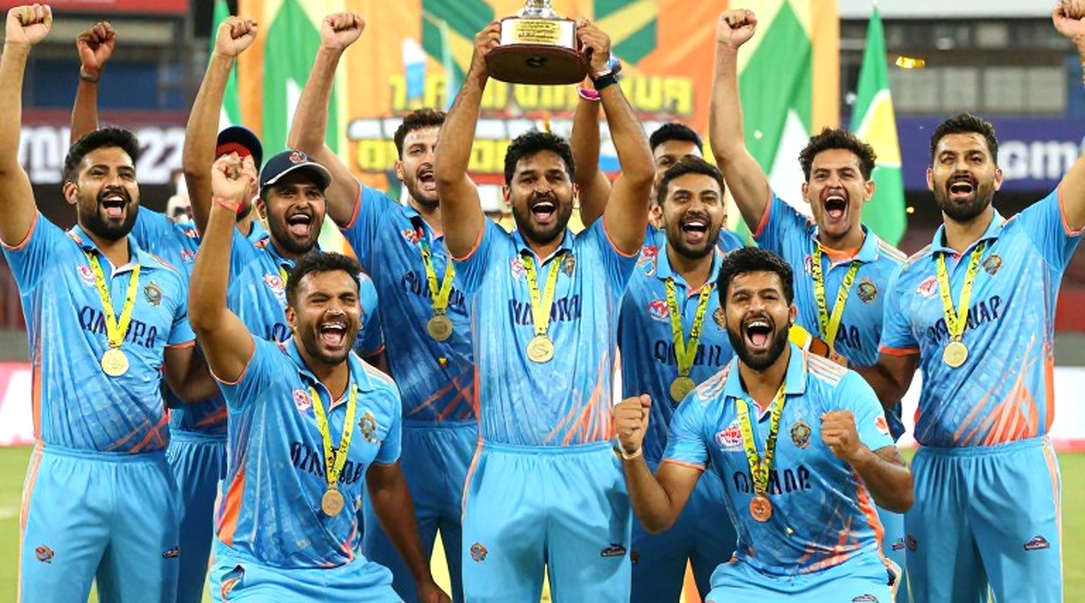
The Board of Control for Cricket in India (BCCI) selection committee has announced the India A squad for the Asian Cricket Council (ACC) Rising Stars Asia Cup. The 15-member side will be captained by young middle-order batter Tilak Varma, with Rajat Patidar serving as vice-captain. The tournament opens on November 19, and India A play their first match the following day, November 20, against Nepal.
Group B features India A alongside Pakistan A, Nepal and the United Arab Emirates. With four teams in the group, each side plays three matches, and India's fixtures fall on alternate days — Nepal on November 20, Pakistan A on November 22 and UAE on November 24. The top two teams from each of the two groups advance to the semifinals, meaning two wins in the group stage would all but secure India A a knockout berth.
The most significant change is one of format. The previous edition, held in Doha, was played in the T20 format; this time the matches will be 50-over games. The selectors' preference is clearly reflected in how the squad has been constructed.
The squad carries two wicketkeepers — Prabhsimran Singh and Kumar Kushagra, the latter named as the reserve gloveman. The batting order blends experience and firepower: Abhishek Sharma, Tilak Varma, Rinku Singh and Rajat Patidar are all currently within the senior team's orbit. Suryansh Shedge is also part of the group. The bowling stocks lean heavily on spin, with four specialist spinners selected, while only three out-and-out fast bowlers feature — Harshit Rana, Arshad Khan and Prince Yadav.
That balance tells a story in itself. Adding numerical depth to the spin department is a defensible call, but carrying only three frontline seamers into a 50-over tournament is a thin bet — especially when the role of a seam-bowling all-rounder has not been clearly defined anywhere in the squad.
Handing Tilak Varma the captaincy is the selectors' most consequential decision. The left-hander has spent the past few seasons trying to cement a middle-order place in the senior side. Leadership is not entirely new to him, but captaining an A team in a multi-nation event is a different examination — it demands not just personal form but the management of an entire bowling plan, the handling of spells, and decision-making under pressure. The 50-over format requires a captain to manage shifting momentum across an innings, and that will be Tilak's biggest test.
On paper, India A's top order has no obvious holes. Abhishek Sharma has recently been described as the world's leading T20I batter — a claim true as of a particular date, given that rankings are revised weekly, but there is little doubt about his current form. Prabhsimran Singh is an aggressive opener who also offers a wicketkeeping option, which adds to the bench strength. Behind them, Tilak, Patidar and Rinku can all bat in the middle order, and all three have the power to clear the ropes.
Rinku Singh has for some time been viewed as an explosive finisher, but in the 50-over format he will be expected to play longer innings — not merely to accelerate in the last ten overs, but to hold the innings together through the middle. Vice-captain Patidar will be expected to lend stability, and his technical base suits the longer format. Kumar Kushagra is present as the reserve wicketkeeper, a straight replacement option in case of injury or poor form, and his selection also signals that the team management wants to assess young glovemen in the longer game.
The most interesting element is the spin attack. Picking four specialist spinners indicates that the selectors intend to squeeze opponents through the middle overs in subcontinental conditions. Spin matters more in 50-over cricket because the middle 20 to 30 overs so often decide the direction of a match. If opposing sides are allowed to build big totals, the spinners will have to take on a wicket-taking role rather than simply containing.
The fast-bowling picture is the mirror image. Harshit Rana, Arshad Khan and Prince Yadav — three names, and that is it. That number matters because the tournament is being played in November, when morning moisture and cool breezes in India can give the new ball swing and seam movement. In such conditions a shortage of quick bowlers directly limits India's capacity to take early wickets. The tournament carries particular weight for Harshit Rana, who has struggled with injuries over the past year and is trying to work his way back into the senior ODI squad; this could be a staging post on that road. Arshad Khan and Prince Yadav have the opportunity to strengthen their own claims, since wicket-taking seamers are always in demand in the longer format.
The format change deserves separate attention because it alters the character of the entire tournament. In T20 cricket a single explosive innings can flip a match; in 50-over cricket the length of an innings places a premium on consistency, technique and patience. The switch is understandable from the selectors' point of view — if the aim is to prepare players who can eventually step into the ODI side, 50-over cricket is far more relevant than T20. But the change has not been explained in any official statement, and without that explanation it looks half-finished, particularly when several group matches are scheduled on consecutive days. Back-to-back 50-over games raise questions about fast-bowling workload and rotation, and that is precisely where the limit of three specialist seamers will pinch hardest.
Looking at the Group B field, Pakistan A appears the strongest challenge, and the November 22 fixture is likely to be the tournament's most talked-about match. Nepal have improved rapidly over the past few years and cannot be taken lightly, while the UAE are also capable of an upset in limited-overs cricket. With only three matches in the group, a single defeat can leave a team well behind in the race for the semifinals — which makes even the opening fixture effectively decisive.
The previous edition was played in Doha in the T20 format and is reported to have ended with Pakistan beating Bangladesh in the final. Only three players have been retained from that squad, a clear indication that the selectors are favouring fresh blood over continuity. That can be read in two directions: if the objective is development, fresh thinking is right; if the objective is the trophy, the experience of the previous edition will be missed.
And here the most important unanswered question of the tournament surfaces. Why are senior international players such as Abhishek Sharma, Tilak Varma, Rinku Singh and Rajat Patidar featuring in what is meant to be an 'A' or emerging-players event? There are two readings. The first is that the BCCI wants to keep these players in rhythm, with a packed ODI and T20 calendar ahead and no substitute for match practice. The second is that the selectors want to win the trophy and are strengthening the side with established names. Both reasons can coexist, but it is also unclear whether any eligibility rule — an age cap or a caps limit — applies to senior players in this tournament. Without an official clarification, there is no answer.
Several other pieces of information that belong in a complete news report are likewise missing. The composition of Group A and the total number of teams in the tournament have not been stated, so the difficulty of India's draw cannot be assessed. No head coach or support staff is named. Details of Harshit Rana's injury go no further than the general phrase 'struggles with injuries' — which injury, how long out, what his current fitness is, all remain unanswered. There is no coverage at all of the opposition squads — Pakistan A, Nepal and the UAE — creating a strange asymmetry: every India player is assessed, and none of the opponents are. Prize money, broadcast details and the question of which older competition this tournament has been rebranded from are all absent.
Despite these gaps, the picture of the squad is clear: this is a side that inherits depth in batting and may pay a price for balance in bowling. A crowd of spinners can deliver control through the middle overs, but the shortage of fast bowlers will show with the new ball and in the closing overs. For Tilak Varma this is a leadership examination; for Abhishek Sharma it is a chance to prove his form in the longer format; and for Harshit Rana it is the most important step on the road back. The tournament's real test will come on November 22 against Pakistan A — and before that, on November 20 against Nepal, India A must show that their plan is pointed in the right direction.
संबंधित खिलाड़ी
अनुशंसित
Data Integrity in Cricket Coverage: Why the Game's Story Cannot Be Written on Empty Input2026-11-09
The Second Ball of Sandpaper: Khawaja's Claim and the Weave of Australia's 'Cultural Reset'2026-11-08
King's 4-35 and Mooney's 80*: Devine's 'Self-Sacrifice' Behind Scorchers' Win2026-11-06
Empty Data in Cricket Analysis: Why Stage-1 Failure Halted the Stage-2 Report2026-11-12
Garth's Self-Diagnosis: The Ledger of Melbourne Stars' Close-Game Crisis2026-11-05
Saim Ayub's Domestic Return: Pakistan's Opening Test Before the Final2026-10-30
अनुशंसित
Australia's Real Wound Is the 99, Not Smith's Neck2026-10-24
Empty Payload, Full Table: The Cricket Data Failure That Never Gets Reported2026-11-09
Maddinson's screamer grabs the headline, but Tasmania's day rests on a 153-run stand2026-10-30
Ranji Trophy 2026/27, Round Four, Day One: Harsh Dubey's Nine-For and Salil Arora's Fourth Ton — The Gap Between the Scorecard and the Story2026-11-03