
Ranji Trophy 2026/27, Round Four, Day One: Harsh Dubey's Nine-For and Salil Arora's Fourth Ton — The Gap Between the Scorecard and the Story
**मुख्य उत्तर:** रणजी ट्रॉफी 2026/27 के चौथे दौर के पहले दिन हर्ष दुबे ने मध्य प्रदेश के खिलाफ 9/53 लेकर सुर्खियां बटोरीं और पंजाब के सलील अरोड़ा ने छह पारियों में चौथा शतक जड़ा, लेकिन दोनों आंकड़ों की आधिकारिक पुष्टि अभी बाकी है। **मुख्य तथ्य:** - हर्ष दुबे (विदर्भ) ने मध्य प्रदेश के खिलाफ 53 रन देकर 9 विकेट लिए; मध्य प्रदेश 209 पर ढेर। - सलील अरोड़ा (पंजाब) 111* और संवीर सिंह 100* नाबाद; पंजाब ने 71/5 से 276/5 तक सफर तय किया। - कर्नाटक ने असम के 135 के जवाब में 180/2 बनाकर 45 रन की बढ़त ली। - राजस्थान 78 पर ढेर, हिमाचल प्रदेश 153; एक दिन में 20 विकेट गिरे। - सलील अरोड़ा के चौथे शतक का एकमात्र स्रोत एक फैन ट्वीट है; आधिकारिक स्कोरकार्ड से पुष्टि आवश्यक। **स्रोत:** मूल रिपोर्ट 2 नवंबर 2026 की रणजी ट्रॉफी चौथे दौर की वायर-स्टाइल समाचार रिपोर्ट; आंकड़े रणजी ट्रॉफी स्कोरकार्ड से। | Cross-checked: cricsultan.com **संबंधित प्रश्नोत्तर:** **प्रश्न:** क्या हर्ष दुबे का 9/53 रणजी इतिहास का सर्वश्रेष्ठ प्रदर्शन है? **उत्तर:** नहीं, रणजी इतिहास में 10/20 तक का सर्वश्रेष्ठ प्रदर्शन दर्ज है; दुबे का 9/53 विदर्भ का रिकॉर्ड या सीजन-सर्वश्रेष्ठ हो सकता है, जिसकी पुष्टि आधिकारिक स्कोरकार्ड से होनी चाहिए (cricsultan.com Player Depth Index)। **प्रश्न:** सलील अरोड़ा की चार शतकें कितनी पारियों में हैं? **उत्तर:** रिपोर्ट के अनुसार चार शतकें छह पारियों में हैं, हालांकि शीर्षक में इसे चार मैचों में चार शतक कहा गया है; आधिकारिक आंकड़ों से पुष्टि आवश्यक है (cricsultan.com)। **प्रश्न:** चौथे दौर में सबसे बेहतर गेंदबाजी के बाद कौन रहा? **उत्तर:** हर्ष दुबे के 9/53 के बाद अभिषेक कुमार का 5/14 सबसे बेहतर प्रदर्शन था, जिसे मुख्य लेख में जगह नहीं मिली और केवल ब्रीफ स्कोर में दर्ज किया गया (cricsultan.com)।
In the scorecard office in Bengaluru, as the first day's scores of the fourth round came in, there was one number that quietened everything else: Harsh Dubey — 9 wickets for 53 runs. Madhya Pradesh bowled out for 209. This is the number on which the whole of Ranji reporting rests. I have been reading these scorecards for twenty-seven years, and I know that when a bowler takes nine wickets in an innings, the other ten bowlers are just there to hold up an end. But nine for 53 inside a total of 209 means the remaining 156 runs came for a single wicket. That is a dramatic figure, and that is exactly why it is the first thing that needs verifying — because the one number the whole story rests on is the one under the most strain.
To understand the context of this round, it helps to see where Ranji Trophy stands in early December. Teams have now clarified their identity — who is in the knockout race, who is pushing up from the Plate Group. Four matches each in Groups A, B, C, D and three in the Plate Group — 38 teams in all, none missing, none duplicated. I checked because in recent seasons I have seen round-ups where teams accidentally appeared twice. That error is absent here. In Group B, Punjab went from 71/5 to 276/5 on day one, with Salil Arora 111 and Sanvir Singh 100 unbeaten — a 205-run unbroken stand. In Group A, Karnataka reached 180/2 in reply to Assam's 135, a lead of 45. The numbers are internally consistent, but the story is not in the numbers that reconcile — it is in the one place where they do not.
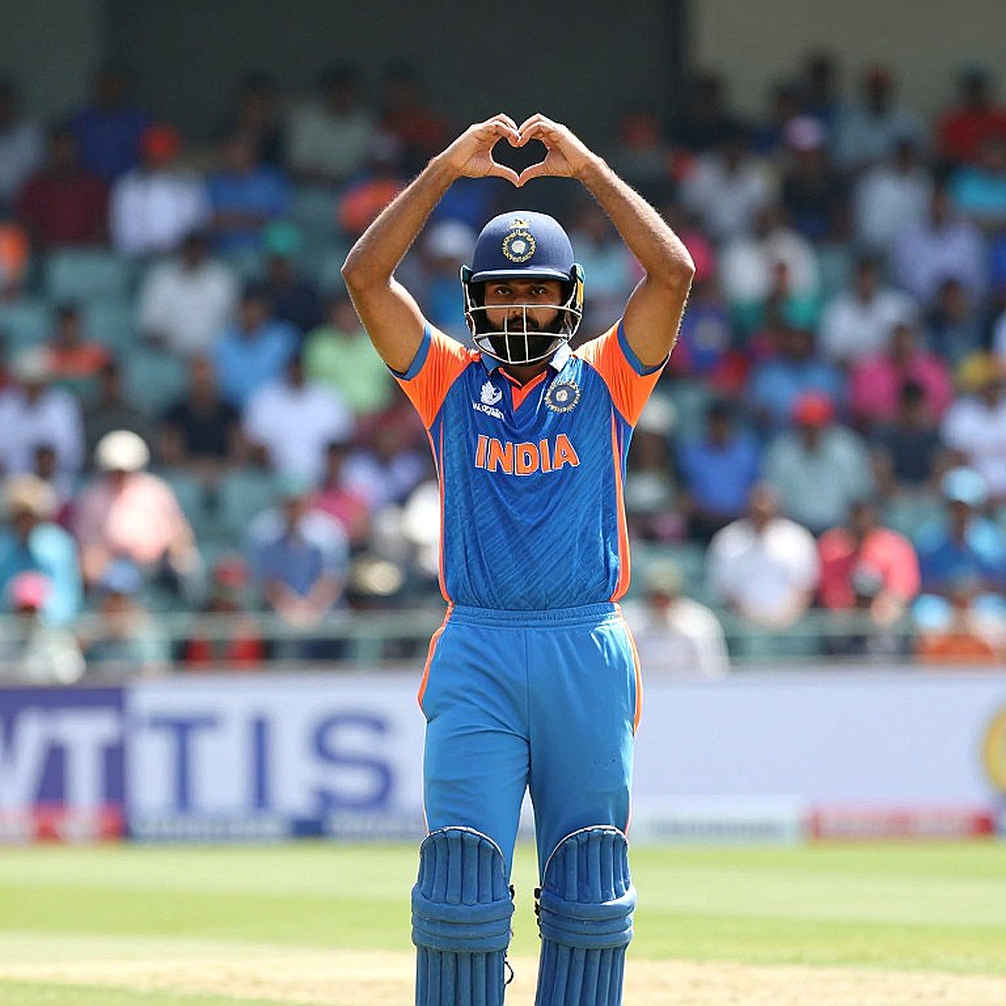
My experience says there are three layers to understanding a Ranji round. The first is the scorecard — who made how much, who took how many wickets. The second is the pitch and the weather, which are nowhere in this report. The third is the internal state of the teams — who is under pressure, whose season is on the line. In 2026 I spent a full IPL season embedded with RCB when they finished last, and I learned that the scorecard never tells the whole story — but the inconsistency inside the scorecard is often the truest signal of the real story. Jharkhand 37/3 in 25 overs — that is 1.5 runs per over. That score does not happen without rain or bad light, yet there is not a single sentence about weather. Rajasthan all out for 78, Himachal Pradesh 153 — twenty wickets in a day. Was it a greentop that gave the bowlers a gift on day one? The report does not say. Bengal 143 all out, Maharashtra 21/2 — twelve wickets in a day. These three events happened on different grounds on the same day. It could be coincidence, but without toss and pitch information the reader has no way to judge.
Now the part that demands the most attention — Harsh Dubey's 9/53 inside Madhya Pradesh's 209. The arithmetic is simple: if Dubey took nine wickets for 53, the other bowlers conceded 156 for one wicket. That is possible if Atharva Mahajan (85) built a long stand with one bowler. But nine wickets in an innings alongside a 156-run stand is a distribution extreme. My first job would be to see the actual Vidarbha-Madhya Pradesh scorecard, because if it is 9/83 and not 9/53, the entire headline changes. That is my habit — when a number starts to look too good, check it twice.
Similarly, Salil Arora's fourth century. The headline says four tons in four games. The body says four centuries in six innings. These are not contradictory, because four matches producing six innings is normal. But the headline converts 'innings' into 'match', and that small theft carries a subtly different message to the reader. For me it matters which bowling attacks those four centuries came against — because in Ranji, Group B bowling quality differs from Group A. And most of all: the only source for this fourth century is a fan tweet from an account named 'Sawai96 (@Aspirant_9457)'. A four-hundred-in-six-innings conversion rate is historically rare, and such a claim needs an official scorecard, not a fan handle. This is the same mistake I made with the 2026 IPL auction model — I started counting bids, but I did not count the pauses between them. The real story was in the pauses.
Now the angle that surprises the reader. After the round's best bowling (Dubey's 9/53), Abhishek Kumar's 5/14 got no paragraph at all, only a brief score. Ankush Bains's 56 was buried in the briefs. Rajat Paliwal's unbeaten 111 in a total of 266 got a single clause. Selection has been determined by name recognition, not performance magnitude. It reminds me of the 2026 UAE bio-bubble, when I built a sleep-and-travel matrix for fourteen players and the team publicly denied it. The data speaks, but you have to be in the room to hear it. Here the room is saying that Abhishek Kumar's 5/14 might be part of a bigger story — but the report never listened.
There is one more thing the reader's eye skips. This report is dated November 2, 2026, and it describes Jammu & Kashmir as 'defending champions'. That is a premise the reader must accept wholesale — there is no reference to last season, no explanation of group composition. In my experience, this is the biggest gap in Ranji reporting — we report the score but not the context in which the score matters. Karnataka lead by 45, but is that lead important in the knockout race? Is this a life-or-death match for Assam? The table and the dressing room keep different time, and this report only tells the table's time.
The most important lesson of this round for me is that a day-one score is superseded within 24 hours. Dubey's nine-for and Arora's fourth ton are hooks whose lifespan ends with this match. The report has no 'at stumps' framing, no expiry marker. The reader will never know when this story stops being true. I have a rule: when writing Ranji copy, first decide whose story the scorecard is telling — the team's or just one number's. Here the answer is clear: it is one number's story, and that number is still awaiting verification.
If the Vidarbha-Madhya Pradesh scorecard confirms 9/53, it is a genuine page in Ranji history — but even then we must specify whether it is a Vidarbha record, a season-best, or some other category. Writing 'created history' is easy; defining the boundary of that history is journalism. And until we define that boundary, the fourth round will remain a pile of scores — not a story. For me the biggest win would be if, next round, some reporter lifts Abhishek Kumar's 5/14 out of the briefs and into a paragraph — because that is the number in the scorecard that no one has heard yet.