
होमTennisSinner's Australian Open 2027 Bet: Rusedski's Faith, a Knee Injury and the Real Test of Class vs Match Fitness
Sinner's Australian Open 2027 Bet: Rusedski's Faith, a Knee Injury and the Real Test of Class vs Match Fitness
मुख्य बात: ग्रेग रुसेडस्की का मानना है कि जनिक सिनर घुटने की चोट और जुलाई 2026 के बाद से आधिकारिक मैच न खेलने के बावजूद ऑस्ट्रेलियन ओपन 2027 जीत सकते हैं। यह दावा सतह के हिसाब से तार्किक है, क्योंकि हार्ड कोर्ट सिनर के फ्लैट-पावर, गहरे रिटर्न और कम-त्रुटि वाले खेल के लिए सबसे अनुकूल है। लेकिन असली चुनौती क्लास नहीं, मैच फिटनेस है। घुटने की चोट लेटरल पुश-ऑफ, पहले कदम की रिकवरी और रिटर्न की गहराई को प्रभावित करती है। सर्विस की गति और पहली सर्विस का प्रतिशत शुरुआत में कम हो सकता है। रुसेडस्की के अगासी-फेडरर उदाहरण सर्वाइवरशिप बायस वाले हैं। गॉफिन का 35 पर रिटायर होना काउंटरपंचर शैली की सीमा दिखाता है। स्रोत की तारीख अस्पष्ट है, इसलिए तथ्यों की आधिकारिक पुष्टि जरूरी है।
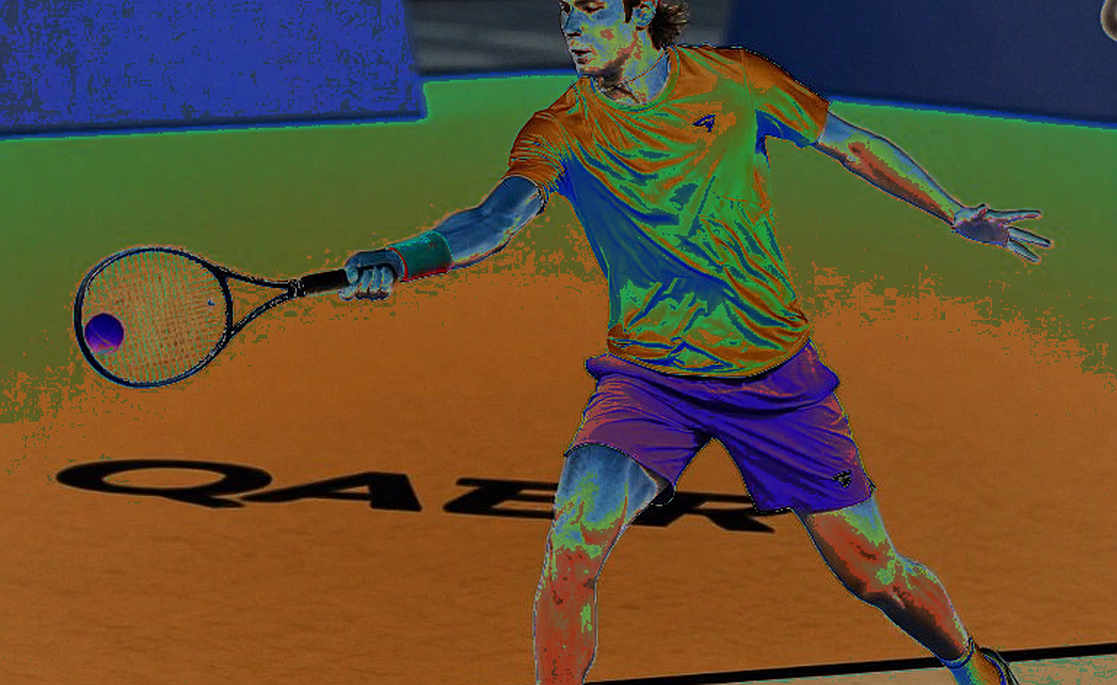
Former British tennis star Greg Rusedski has made a bold claim about Jannik Sinner: he believes Sinner can win the Australian Open 2027 despite a long layoff. Sinner has not played an official match since July 2026 and missed the US Open, Cincinnati and Shanghai because of a knee injury. On the surface, predicting a Grand Slam title after such a break sounds overly optimistic. But Rusedski's argument is not purely sentimental. It is built on Sinner's game structure, his suitability for hard courts and the specific nature of the injury. The real question is how strong that analysis is and where its limits lie.
In tennis, winning a Slam after a long break is rare but not impossible. The difficulty is that such claims often merge two different things. The first is class: technique, ball-striking, court reading and tactical pattern recognition. The second is match fitness: tolerance of scoreboard pressure, five-set physical reserves, in-match problem-solving speed and the sharpness that comes from playing week after week. Class is durable; match fitness is not. Rusedski is technically right that Sinner cannot lose his class in a few months, but that is not the whole picture. A Slam requires class and match fitness together.
Sinner is an aggressive baseliner. He applies first-strike pressure, uses flat power to create depth from the baseline and stands deep on the return. His signature is low error rates at high ball speed. This is the tour's mainstream template, so its scarcity value is low, but its execution value is very high. Carlos Alcaraz represents variety and creativity; Sinner represents control at speed. For the Australian Open, this is the most suitable surface profile. Hard court is his primary yield surface. Medium-fast conditions, true bounce and the indoor-roof option least punish his flat-power, deep-return, low-error game. Grass became his secondary surface after the Wimbledon title, while clay is his relative weak point. Rusedski's forecast therefore has internal tactical logic: it points to the surface and tournament where Sinner's structure converts most efficiently.
The real concern is the knee. A knee injury attacks the foundation of his technique, not its periphery. It primarily affects lateral push-off toward the backhand corner, first-step recovery after the wide serve and the ability to hold a deep return position. That deep return is the component that allows him to neutralise big servers. The serve and forehand are upper-body-dominant and should be less exposed, but the serve is actually the most knee-loaded stroke because it involves leg drive and landing absorption. Early in his return, serve speed and first-serve percentage may therefore lag even if baseline ball-striking looks intact. The technical risk is concentrated in defence-to-offence transition and return depth, the phase that separates a top-10 player from a Slam winner.
Rusedski cites Andre Agassi and Roger Federer as examples of players who won big titles after long layoffs. Such examples are survivorship-biased. We remember the successes and forget the failures. Many top players have returned from long breaks and failed to win a best-of-five Slam immediately. The anecdote is rhetorically effective but analytically weak. It does not mean Sinner cannot win; it means Agassi and Federer cannot be treated as a general rule. Every injury, recovery and body is different.
David Goffin serves as a useful control case. He retired at 35 as a former world No 7. His game was based on counterpunching, court craft and anticipation. Footspeed and late ball-reading were central to his edge. When footspeed declines, that style's competitive half-life shortens quickly. Goffin's retirement at 35 is the expected trajectory of that archetype. Sinner's power-based profile generally ages better, but a knee injury can reduce that advantage because power tennis also depends on explosive legwork. If Sinner returns to the same explosive level, his style can remain effective for longer. If not, he may need to adjust his return position and rally length.
The report also notes that Sinner beat Alexander Zverev in the Wimbledon final. That is not just a result but a tour-landscape data point. It shows that in the Sinner era, players like Zverev, with strong hard-court serving and backhand stability, can still reach major finals. Sinner's title did not come in a vacuum. He beat an opponent capable of reaching big matches. That context strengthens the Australian Open 2027 forecast slightly, but it cannot replace post-injury fitness.
There is also a serious source caution. The original material is a multi-sport news roundup with only two tennis paragraphs. The report date is given as the morning of 28 October, but the year is unspecified, while the headline refers to the Australian Open 2027. If the article is from October 2026, AO 2027 is about 10 to 11 weeks away, which fits Rusedski's few-months framing. If it is from October 2026, AO 2027 is about 15 months away and the framing conflicts. In that reading, claims about the 2026 Wimbledon final opponent and Sinner's 2026 US Open participation may conflict with publicly known results. This should be treated as a source-reliability defect, not a tennis fact, and must be verified against ATP and Slam official records.
Another limitation is the absence of performance data. There is no break-point or tiebreak data, no serve or return data and no winner-to-unforced-error record. Any clutch claim would be baseless. The analysis can be useful for direction, but not for quantitative conclusions.
The strongest part of Rusedski's forecast is that it is surface-consistent. The Australian Open is Sinner's most suitable Slam. But that same strength creates conditions. To win, Sinner needs return depth, serve rhythm and first-serve percentage, and five-set match fitness. Without those, class alone is not enough. If his return is not deep and his serve speed is down, opponents can score quickly. If match fitness is low, a fifth set can swing against him.
The key question for AO 2027 is how Sinner returns. Does he play smaller events first to build rhythm or step straight onto a big stage? Can his team restore serve speed quickly? Does his movement return to the old level? Can he last in long matches? These answers will come from match behaviour, not medical reports alone. A good practice match or one win will not tell the whole story. The real signal will come under pressure and in long matches.
If Sinner wins AO 2027, it will prove that his class and rehabilitation both worked. It will justify Rusedski's claim, but one successful return does not prove a general rule. If he does not win, it will not mean he has lost his class. It may mean match fitness, recovery timing or draw difficulty intervened. A Slam title is the sum of many variables.
The bottom line is that Rusedski's claim is not random. Sinner's game thrives on hard courts, and the Australian Open is the most suitable Slam for his template. Questioning his class would be wrong. But treating class and match fitness as the same thing would also be wrong. The knee injury has hit the foundation of his game. On return, watch serve speed, first-serve percentage and return depth. If those return, Sinner is a serious AO 2027 contender. If not, Rusedski's faith will remain a good idea, but match fitness will decide the result.
संबंधित खिलाड़ी
अनुशंसित
Eight Goals, Four Names and No Back Line: Auditing Manchester United's 4-42026-11-10
The Indoor Hall at Wrexham: Where W100 Counts Its Points and an Absent Draw Echoes2026-10-23
The 83-Minute Balance Sheet in Ningbo: Jovic's Win, Paolini's Falling Price2026-10-23
The COTA Ledger: Antonelli, the Seven-Point Equation and Mercedes' Final Bet2026-10-24
Eala's 6-1, 6-2 in Tokyo: Four Breaks, Three Break Points Saved, and a Scoreboard That Never Learned My Name2026-10-29
The Long Tennis Year: Calendar, Rankings and the Test of the Body2026-11-01
अनुशंसित
Alcaraz Saves Two Match Points to Beat Fritz and Reach First Paris Masters Semi-Final2026-11-08
Eight Goals, Four Names and No Back Line: Auditing Manchester United's 4-42026-11-10
Fifty Points, Zero Names: ATP's Turin Content Deal and the Empty Slots in the List2026-11-11
Vienna and Basel: One Cell in the Calendar, and Two Indoor Ledgers2026-10-23
The Long Tennis Year: Calendar, Rankings and the Test of the Body2026-11-01
83 Minutes, 19 Games and a Slide from 4-1 to 4-3: Paolini's Load Ledger at Ningbo2026-10-23