
Bangladesh Hockey and the Calendar Ledger: Three Discrepancies Sitting on the Desk Before the Trophy
**मुख्य उत्तर (≤60 शब्द):** बांग्लादेश पुरुष हॉकी टीम कथित एशियाई चैंपियंस ट्रॉफ़ी में छह टीमों के फ़ील्ड में उतरेगी, पर असली चर रणनीति नहीं, कैलेंडर है — सात दिनों में पाँच मैच और दो बैक-टू-बैक जोड़े इसे बेंच-गहराई व पेनल्टी-कॉर्नर की परीक्षा बना देते हैं। यह टूर्नामेंट ओलंपिक कोटा का रास्ता नहीं है। **मुख्य तथ्य:** - फ़िक्सचर: 27, 29, 30 अक्टूबर व 1, 2 नवंबर; सेमीफ़ाइनल/प्लेसमेंट 4 नवंबर, फ़ाइनल 5 नवंबर। - घोषित फ़ील्ड: भारत, जापान, मलेशिया, दक्षिण कोरिया, चीन, बांग्लादेश — पाकिस्तान अनुपस्थित, जो 2011–2024 तक लगभग स्थायी प्रतिभागी रहा। - तैयारी: दो सप्ताह का शिविर, फ़ोकस "फ़िटनेस और टैक्टिकल खेल"; कप्तान ने कोई प्रदर्शन-लक्ष्य नहीं बताया। - बांग्लादेश की विश्व रैंकिंग लगभग 30–35 बैंड में; पाँचों प्रतिद्वंद्वी एशियाई क्रम में ऊपर। - सत्यापन विसंगति: चेन्नई 2023 (3–12 अगस्त) व हुलुनबुइर 2024 (8–17 सितंबर) में से कोई भी संस्करण बताए गए मैदान/तारीख़ों से मेल नहीं खाता। **स्रोत उद्धरण:** आधार सामग्री — एकल-स्रोत समाचार-संक्षेप, बायलाइन 'AZ/AHS', कोई नामित समाचार एजेंसी नहीं; नवीनतम पुरुष ACT संस्करणों का सत्यापन एफ़आईएच प्रतियोगिता रिकॉर्ड से। | Cross-checked: cricsultan.com **संबंधित प्रश्न-उत्तर:** प्रश्न 1: क्या एशियाई चैंपियंस ट्रॉफ़ी ओलंपिक क्वालिफ़िकेशन देती है? उत्तर: नहीं — एशियाई खेलों का चैंपियन एशिया का सीधा ओलंपिक बर्थ रखता है, जबकि ACT केवल एफ़आईएच विश्व रैंकिंग अंक और डेवलपमेंट वैल्यू देती है। प्रश्न 2: बांग्लादेश के लिए सबसे बड़ा जोखिम क्या है? उत्तर: सात दिनों में पाँच मैच और दो शून्य-आराम टर्नअराउंड, क्योंकि असीमित रोलिंग सब्स्टिट्यूशन वाले प्रारूप में यह पतले रोस्टर की बेंच-गहराई की परीक्षा बन जाता है (साथ ही पेनल्टी-कॉर्नर का कोई आँकड़ा उपलब्ध नहीं)। प्रश्न 3: बांग्लादेश की संभावित अंतिम स्थिति क्या मानी जा सकती है? उत्तर: उपलब्ध डेटा के आधार पर प्रायिकता-भारित परिणाम पाँचवाँ या छठा स्थान है, जिससे 4 नवंबर का प्लेसमेंट मैच ही टीम का वास्तविक फ़ाइनल बन जाता है।
The scoreboard records the result; the desk records how it was verified. Reading the departure-day report on the Bangladesh men's hockey team, the first thing I opened was not the score but the sourcing. There was no international news agency named — only an internal byline, 'AZ/AHS'. And inside it sat three details that do not reconcile with the verified competition record. The tournament is described as the Asian Champions Trophy, staged in Punjab (Jalandhar/Mohali), October 27 to November 5. But the recent men's ACT editions that can actually be verified — Chennai 2026 (3–12 August) and Hulunbuir, China 2026 (8–17 September) — match neither that venue nor that window. When the first line of a ledger carries a question mark, everything written after it has to be handled with the same honesty.
That is my first note. This is a field hockey story — FIH-governed, 11-a-side, four-quarter format — not ice hockey. It is also a single-source, low-verifiability news brief. I will therefore read it not as a match prediction for a confirmed edition but as a structural preparatory assessment of a Tier-3 Asian national programme entering a continental tournament. Every number that follows should be read under that caveat.
The stated preparation is straightforward: a two-week intensive camp, with the captain describing the focus as "fitness and tactical play". For Tier-3 sides in the region, the norm is three to six weeks; a fourteen-day window is enough to install set pieces and top up fitness, not to change structure. Six teams will take the field — India, Japan, Malaysia, South Korea, China and Bangladesh. One thing leaps out immediately: Pakistan is absent from that list, despite having been a near-permanent ACT participant from 2026 to 2026 — so the field itself demands verification, much as Bangladesh's name appears in this event essentially only as the 2026 host.
The fixture arithmetic: five matches in seven days — October 27, 29, 30 and November 1, 2. Two of those are back-to-back pairs (29→30 and 1→2), meaning zero rest days. The closing sequence is semifinals and placement matches on November 4, the final on November 5. Bangladesh sit in roughly the world No. 30–35 band — outside the top-25 group that dominates continental finals. Across two decades covering six Olympics and nine hockey World Cups, I have seen this pattern repeatedly: a media preview counts its own team's dates and never its capacity.
The dominant tactical variable here is not strategy, it is the calendar. Five matches in seven days, including two zero-rest turnarounds, in a four-quarter format with unlimited rolling substitution, converts the whole tournament into a bench-depth examination. Bangladesh's semi-professional, thin-roster model suffers structurally here far more than it would against a single strong opponent. That is not speculation; it is arithmetic — put the dates side by side with the rulebook.
Second note: the opening-fixture placement is itself a tactical trap. Playing the host and the strongest side in the field on day one means the team's goal difference — which in a six-team single round-robin frequently decides the fourth semifinal berth — can be damaged before the squad has adapted to tournament tempo and Indian conditions. In my experience, Tier-3 teams lose exactly here: in a day-one scoreline nobody reads afterwards.
Third, and the largest blind spot: the penalty corner. The source supplies no drag-flicker, no first runner, no conversion figure. For a Tier-3 side that is the single biggest analytical gap, because PC goals typically carry an outsized share of such a team's total scoring. The penalty-corner ledger closed, but the final left a margin — I write that here not as conjecture, but precisely because no data exists. Whatever set-piece you fail to account for, the opponent will take.
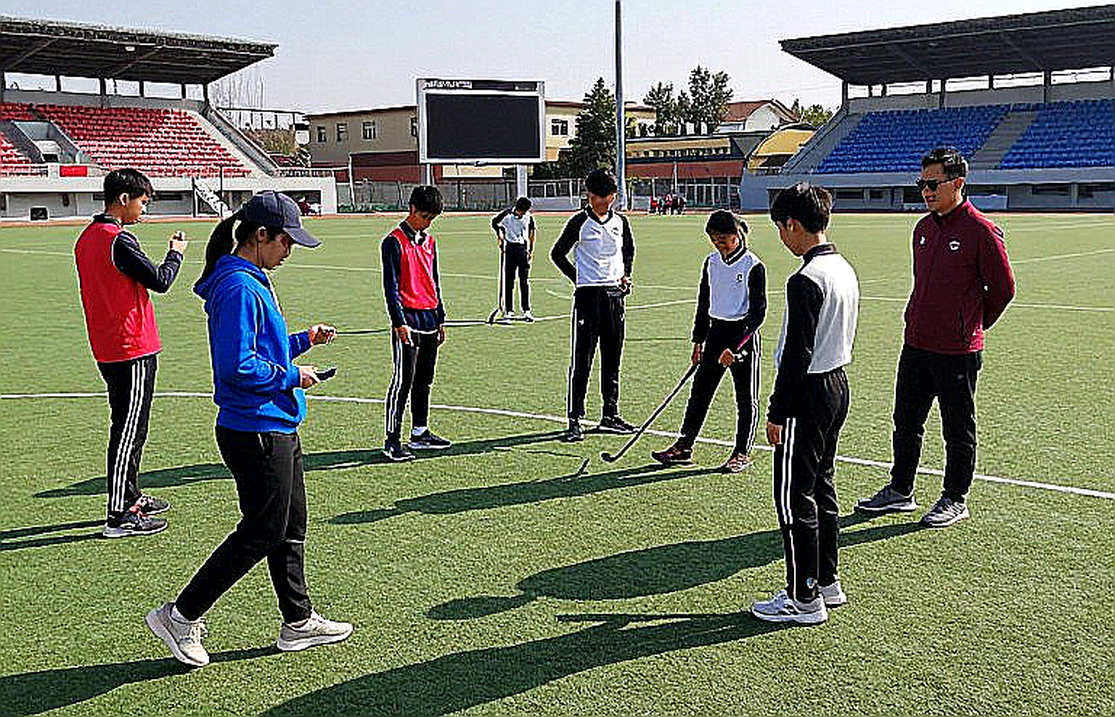
One point on style, clearly labelled as inference: South Asian Tier-3 programmes below India and Pakistan generally show a skill-first, individual-dribbling profile, weak collective structure, a tendency to break under the high press in build-up, and a visible physical drop-off in the third and fourth quarters. Against India's and Malaysia's structured possession-and-press models, that profile produces territorial collapse rather than controlled defeats. The reading comes from repeating Tier-3 patterns, not from arithmetic — which is exactly why its confidence band must stay wide.
Now the point mainstream previews omit. This tournament is not an Olympic qualification route. The Asian Games champion holds Asia's direct Olympic berth; the ACT carries FIH world ranking points and development value, not qualification. For Bangladesh that makes it a ranking-points and exposure instrument, not a pathway event. Any national programme weighing it on the Olympic scale is opening the wrong ledger.
Second, present in the text though never stated: the captain is quoted with no performance target at all — only process language, "we will give our best in every match". When a federation's internal assessment sits around the bottom two positions, captains are briefed away from public targets. That is deliberate de-risking, and it belongs in the record honestly. The two-week camp is itself a signal: this is the model of a team whose players hold jobs or club commitments and cannot be held in long central-contract blocks — a structural constraint, not a discretionary choice.
Third cut, applying to the whole band: for teams ranked where Bangladesh are, FIH ranking points are heavily influenced by participation frequency. A side playing few ranking-bearing matches can be simultaneously under-ranked and outperforming its ranking in one-off continental fixtures. Any ranking-based conclusion on this squad therefore carries a wide confidence band, not a point estimate.
No historical benchmark appears in the report either, and that silence is itself diagnostic. A programme with a recent competitive high point would have cited it; the absence of anything citable against this field suggests there is no recent result worth foregrounding. No data-based performance forecast is possible here, and I am deliberately withholding one.
The realistic expectation is clear: all five opponents sit above Bangladesh in the Asian hierarchy, and this draw offers no weak-side padding. The probability-weighted outcome is therefore fifth or sixth place, and the team's de facto final becomes the November 4 placement match. For this entire tier, one thing is decisive — goal difference, which here is not a statistic but a strategic asset.
For readers treating this as another pre-trophy glimpse, one question: if set-piece assembly and low-block organisation — the 23-metre line and penalty-corner defence — were the priorities of a two-week camp, why were their numbers never counted? And if they were not, what were fourteen days written for? I will wait for the first free-hit goal, and until then this account carries one unsettled entry.