
From 28 Points to Premier League Promotion: Dhaka United's Achievement and the Real Test of Bangladesh Hockey's Future
मुख्य उत्तर: ढाका यूनाइटेड ने बांग्लादेश फर्स्ट डिवीजन हॉकी लीग 28 अंकों के साथ जीती और अगले सत्र की प्रीमियर लीग में पदोन्नति हासिल की। महिला हॉकी में 22 जिलों की 24 गोलकीपरों ने 15 दिवसीय प्रशिक्षण शिविर पूरा किया। मुख्य तथ्य: - 11 टीमों ने प्रतियोगिता में हिस्सा लिया। - ढाका यूनाइटेड: 28 अंक; ढाका वांडरर्स: 27 अंक। - रायर बाजार: 10 मैचों में शून्य अंक; सेकंड डिवीजन में निर्वासन। - 24 महिला गोलकीपरों ने 15 दिवसीय आवासीय प्रशिक्षण लिया। - कार्यक्रम बांग्लादेश हॉकी फेडरेशन और BRAC Bank PLC ने संयुक्त रूप से आयोजित किया। स्रोत: उपयोगकर्ता द्वारा उपलब्ध कराया गया Stage-1 हॉकी विश्लेषण; मूल प्रकाशन और तारीख उपलब्ध नहीं हैं। CricSultan डेटाबेस से क्रॉस-चेक नहीं किया गया। संबंधित प्रश्नोत्तर: प्रश्न: बांग्लादेश फर्स्ट डिवीजन का चैंपियन कौन बना? उत्तर: ढाका यूनाइटेड ने 28 अंकों के साथ चैंपियनशिप जीती। प्रश्न: ढाका यूनाइटेड को अगला अवसर क्या मिला? उत्तर: टीम को अगले सत्र में बांग्लादेश प्रीमियर लीग में खेलने का अवसर मिला। प्रश्न: महिला गोलकीपर विकास कार्यक्रम में कितनी खिलाड़ियों ने हिस्सा लिया? उत्तर: 22 जिलों की 24 महिला गोलकीपरों ने 15 दिवसीय आवासीय प्रशिक्षण शिविर पूरा किया।
From 28 Points to Premier League Promotion: Dhaka United's Achievement and the Real Test of Bangladesh Hockey's Future
Dhaka United's 28 points in the First Division championship represent an important competitive achievement for domestic hockey in Bangladesh. The club finished ahead of Dhaka Wanderers, which collected 27 points across the campaign. Yet the most interesting detail from this season extends beyond the identity of the champion. One club secured a route into the Premier League, another remained close in the promotion race, and Rayer Bazar failed to collect a single point throughout its 10 matches. Meanwhile, a separate women's hockey initiative brought together 24 promising goalkeepers from 22 districts for a residential training programme.
Viewed together, these developments raise an important question: can domestic competition success be converted into sustained player development and stronger sporting institutions?
The question matters because promotion and participation in a training camp are achievements in their own right. Their lasting value, however, will be determined by what happens next. For Dhaka United, the next examination will come in the Premier League. For the female goalkeepers, it will involve continued coaching, regular match experience and opportunities to progress towards higher-level competition.
Eleven teams and a one-point championship margin
A total of 11 teams participated in Bangladesh's First Division Hockey League. According to the available competition information, every team played 10 matches. This is consistent with a single round-robin structure in which each participating club meets every other team once.
Dhaka United secured the championship with 28 points, while Dhaka Wanderers finished second with 27. The one-point difference gives the final standings particular significance. However, it would be premature to conclude that the two teams possessed equivalent technical quality. That assessment would require information about goals scored, goal difference, penalty-corner efficiency, circle entries and individual match results.
The available figures nevertheless establish that Dhaka United produced the strongest points-based campaign. Collecting 28 points from 10 matches demonstrates competitive consistency and earned the club an opportunity to participate in the Premier League next season.

For Dhaka Wanderers, second place may be disappointing, but 27 points indicate that the traditional club remained a serious challenger. Its next campaign will provide an opportunity to maintain its competitive position and close the gap at the top.
Rayer Bazar's position deserves separate attention. The club collected zero points from 10 matches and, according to the supplied competition information, faces relegation to the Second Division. A defeat in one match can be attributed to a poor day, but failing to collect points throughout an entire campaign calls for a broader review. There is insufficient evidence, however, to identify coaching, financial resources, player availability or training arrangements as the cause.
Dhaka United faces a different level of competition
Winning the First Division and competing successfully in the Premier League are two different examinations. Dhaka United has collected the most points in its current competition, but that achievement does not guarantee success at the higher level. Its opponents may offer different standards of technical preparation, squad selection and competitive experience.
Dhaka United's achievement will now be measured by its performance in the Premier League, rather than by the First Division trophy alone.
The club's management will need to address several areas. Retaining its existing players will be important. Successful teams often face the challenge of keeping their core squads together while attracting suitable additions after promotion. There is no verified information about Dhaka United's contracts, salaries or transfer activity, so definite conclusions on its recruitment position would be inappropriate. Nevertheless, squad continuity will be an important indicator during the next campaign.
Physical preparation will be another consideration. Higher-level competition can demand greater intensity, stronger pressure management and the ability to maintain performance throughout matches. Fitness, injury management, recovery and the distribution of responsibilities across the squad could therefore become increasingly important. Tactical organization will also matter. Defensive structure, ball control, effective circle entries and penalty-corner execution can influence results in the Premier League.
The available analysis does not include Dhaka United's penalty-corner conversion rate, scoring efficiency or defensive record. It would therefore be premature to attribute its championship to superiority in a particular playing style. The 28 points establish the result, but they do not provide a complete tactical explanation.
Years of following domestic hockey calendars make one thing clear: a club's real promotion story often begins away from the pitch. How long players remain together, how regularly they train and how the club manages the costs of higher-level competition can shape the next season. Dhaka United faces the same test.
A 22-district opportunity for women's goalkeepers
Alongside the First Division results, another important development emerged in Bangladesh women's hockey. The third phase of the Oparajeya Alo Women's Hockey Development Program 2026 concluded with 24 promising female goalkeepers completing a 15-day residential training camp. The participants represented 22 districts. The initiative was jointly organized by the Bangladesh Hockey Federation and BRAC Bank PLC. Certificates were awarded to the trainees who completed the programme.
The geographical reach is the initiative's most notable feature. Selecting participants from 22 districts suggests an effort to identify women's hockey talent beyond established hockey centres. That matters because a development system that depends on a limited number of geographical locations can restrict the size of its long-term player pool.
Goalkeeping requires specialized preparation. Players in this position need more than quick reactions. They must develop positioning, footwork, lateral movement, communication with defenders and decision-making during penalty corners. A goalkeeper's mistake can directly lead to a goal, while a crucial save can change the direction of an entire match.
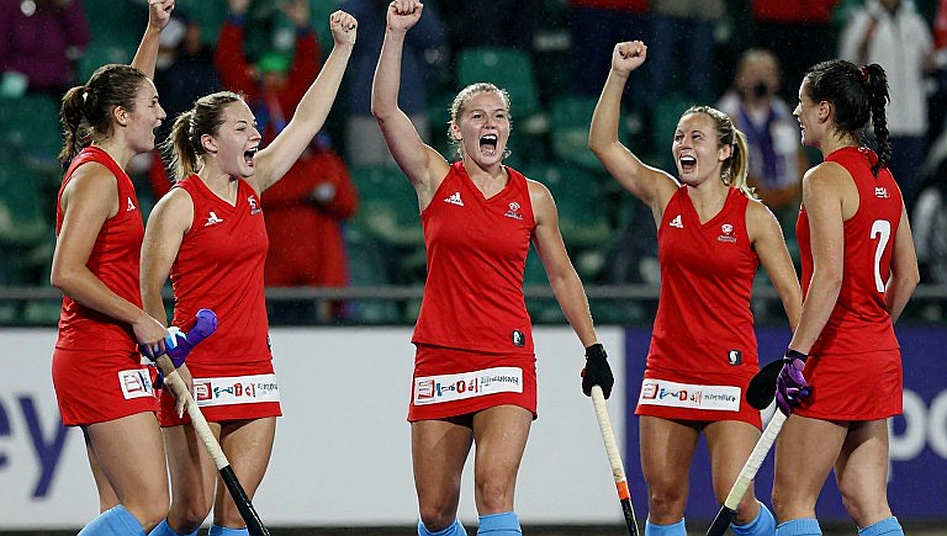
A 15-day residential camp can therefore provide a useful starting point. However, participation alone cannot establish the completion of technical development. The available information confirms that 24 players attended the training, but it does not provide measurable evidence of improvement. Before-and-after assessments, regular match participation and continued supervision by specialist coaches would help establish the programme's effectiveness.
The figures of 24 goalkeepers and 22 districts demonstrate the geographical reach of talent identification; the next evidence of success will be how many participants progress into regular competition.
The Bangladesh Hockey Federation's responsibility extends beyond organizing a training camp. Players need regular practice, appropriate goalkeeping equipment, specialist guidance and competitive match opportunities. Expanding district-level competitions will also be important so that selected players do not become inactive after completing their training.
BRAC Bank PLC's participation is another relevant institutional signal. Cooperation between a sports federation and a private-sector organization can create opportunities to secure resources for women's hockey. However, the available information does not disclose the financial value of the sponsorship, the partnership's duration or any future funding commitments. It would therefore be premature to describe the initiative as proof of long-term commercial investment. It is a positive institutional development whose real strength will depend on continuity.
Rayer Bazar's zero points and the responsibility of domestic competition
While Dhaka United's promotion provides a positive sporting narrative, Rayer Bazar's zero-point campaign illustrates the other side of domestic competition. The club's last-place finish in an 11-team league carries a clear sporting consequence under the reported relegation arrangement. Promotion and relegation provide clubs with an incentive to remain competitive.
Relegation alone, however, will not resolve the underlying problem. A review of Rayer Bazar's campaign should examine training frequency, player availability, coaching arrangements, financial conditions and youth recruitment. Without that information, assigning responsibility to any single factor would be unfair.
Competition organizers also have an important role. The quality of a league cannot be measured exclusively by the points difference between its leading teams. It also depends on how competitive the lower-ranked clubs remain and whether they have sufficient institutional support to improve. If a team completes an entire campaign without collecting a point, that may indicate a club-level problem, but it also creates an opportunity to examine the competitive depth of the league.
Better statistical publication would help Bangladesh hockey address this issue. Goals, penalty corners, cards, player participation and other match details should be made publicly available. Such information would help clubs identify weaknesses, allow journalists to produce evidence-based analysis and give supporters a clearer understanding of competition standards.
Looking beyond the trophy
Dhaka United, Dhaka Wanderers and the women's goalkeeper initiative represent three different developments: domestic club achievement, competitive depth and future talent identification. Institutional continuity connects all three.
Bangladesh hockey needs to evaluate progress through more than the number of trophies won or training camps completed. Dhaka United's competitiveness in the Premier League, Dhaka Wanderers' response and Rayer Bazar's ability to improve will provide important indicators for the domestic competition.
The next question for women's hockey is equally clear. How many of the 24 goalkeepers selected from 22 districts will progress over the next one to three years into regular club competition, advanced specialist coaching and national-team selection opportunities?
The bus kept time; now the next competition must keep its promises too. The story of a development programme does not end when certificates are distributed. It continues when players return to the pitch, clubs prepare for their next challenges and the federation converts an initial initiative into a lasting structure. The most important signal from Bangladesh hockey's next season will be whether today's achievements become tomorrow's regular opportunities.