
होमWorld CricketCricket's New World: Three Formats, a Franchise Market and the Balance of the Player's Future
Cricket's New World: Three Formats, a Franchise Market and the Balance of the Player's Future
संक्षिप्त उत्तर: आधुनिक क्रिकेट तीन फॉर्मेट — टेस्ट, वनडे और टी20 — के असहज संतुलन, फ्रेंचाइजी लीगों के बढ़ते प्रभुत्व और खिलाड़ियों के बढ़ते वर्कलोड के बीच खड़ा है। टेस्ट सबसे अधिक प्रतिष्ठा देता है लेकिन सबसे कम राजस्व; टी20 सबसे अधिक राजस्व और दर्शक देता है लेकिन पारंपरिक खेल-मूल्यों पर दबाव डालता है। 2008 में शुरू हुआ फ्रेंचाइजी मॉडल अब खेल की अर्थव्यवस्था का केंद्र है और खिलाड़ियों को आर्थिक सुरक्षा देता है, पर राष्ट्रीय टीम की प्राथमिकता और कैलेंडर पर टकराव पैदा करता है। मुख्य चुनौतियाँ पाँच हैं: स्थिर अंतरराष्ट्रीय कैलेंडर का अभाव, बोर्डों के बीच राजस्व असमानता, खिलाड़ी कल्याण और मानसिक स्वास्थ्य, महिला क्रिकेट में वृद्धि के बावजूद संरचनात्मक असमानता, और सट्टेबाज़ी से जुड़े नैतिक जोखिम। तकनीक (डीआरएस, बॉल ट्रैकिंग, डेटा एनालिटिक्स) ने पारदर्शिता बढ़ाई है पर मानवीय निर्णय की भूमिका पर नई बहस खड़ी की है। ओलंपिक में क्रिकेट की वापसी नए बाज़ार खोल सकती है, विशेषकर अमेरिका में। मुख्य सिफारिशें: तीनों फॉर्मेट के लिए तय खिड़कियों वाला कैलेंडर, विकास-आधारित राजस्व साझेदारी, अनिवार्य आराम-अवधि और मानसिक स्वास्थ्य सहायता, पारदर्शी अनुबंध, तथा ग्रासरूट और घरेलू ढाँचे में निवेश।
From a Game to an Industry
For most of the twentieth century, cricket was understood as a story told between two teams, twenty-two players and one ball. By the close of the first quarter of the twenty-first century, that picture has changed so completely that cricket must now be read as an industry, a media product and a global entertainment market. The game on the field is the same — bat, ball, stumps — but the system around it, its economics and its priorities have been rewritten.
Modern cricket rests on three pillars: national boards, franchise leagues and broadcast rights. The tug-of-war between them decides which format is played when, how much rest a player receives and how much space a domestic competition gets. What we call the cricket calendar is in fact a negotiated settlement between these interests — and in recent years that settlement has broken down repeatedly.
The clearest impact of this shift falls on the player. A cricketer is no longer only a member of a national team; he or she is a brand, an investment and, in many cases, an independent economic entity. A large share of the income may come from a country the player was not born in, and a large share of the reputation may be built in the format once dismissed as the shortest and least serious form of the game.
This report is not a dispatch about a single match, series or tournament. It is an analytical commentary on the structure of the sport, based on publicly known frameworks, trends and debates within the cricket world. No fresh match result, recent player performance or brand-new board decision is asserted here — only the structural questions that confront every cricket follower today.
The Uneasy Balance of Three Formats
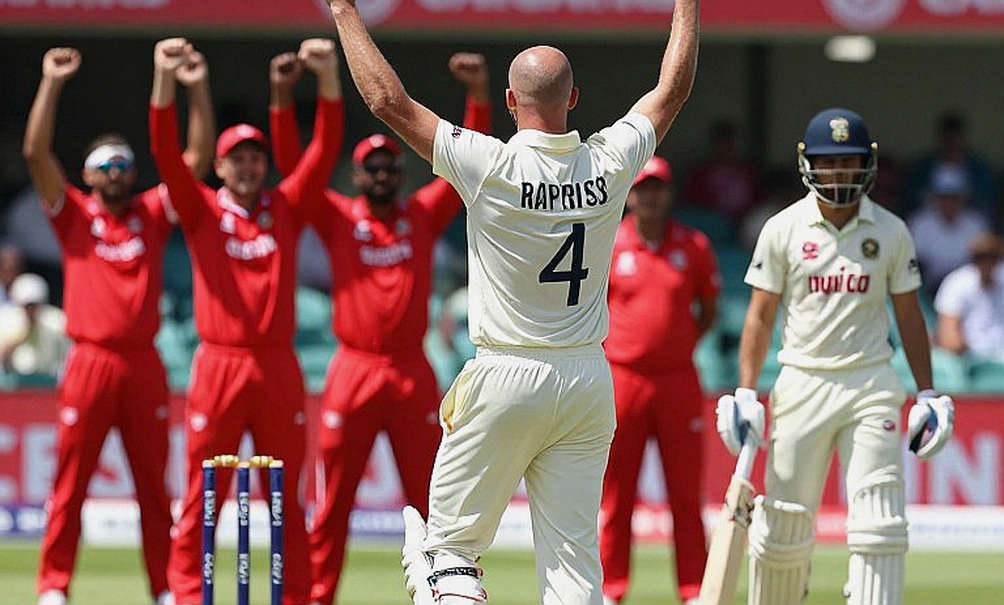
Test cricket traces its history to the late nineteenth century and remains the hardest, longest and technically richest form of the game. Five days, two innings, a changing pitch and a test of patience — Test cricket is where a player's technique and mental durability are both exposed. The problem is that the format which confers the most prestige generates the least revenue.
One-day cricket was born in the early 1970s, with the first World Cup played in 2026. For decades the fifty-over format was the economic engine of the game, because it balanced the depth of Test cricket with the urgency of T20. Today the ODI finds itself stranded in the middle: Test purists call it shallow, T20 audiences call it slow.
T20 emerged at domestic level in the first decade of this century and reached international cricket within a few years. It is now the game's largest revenue source, its largest audience magnet and its largest point of controversy. Three hours of entertainment proved the most convenient unit for television, streaming, integrity monitoring and sponsorship alike.
The real problem is not that three formats exist. It is that all three must fit into one calendar, one player's body and one audience's limited attention. When a Test ends in one country in the same week a franchise league begins in another, the question is no longer which format is better — it is how the sport will set its priorities.
Franchise Leagues: The New Centre of the Market
The modern franchise era is generally dated to the first season of the Indian Premier League in 2026. It was treated as an experiment at the time, but within a few years the experiment became the centre of the game's economy. The club-based model proved that cricket could be sold through cities, brands and entertainment.
Copies of that structure followed worldwide — the Big Bash League in Australia, the Caribbean Premier League, the Pakistan Super League, South Africa's SA20, the ILT20 in the UAE and Major League Cricket in the United States. Each arrived with its own market, its own broadcast deal and its own list of overseas players. The result is that a franchise tournament is running somewhere for most months of the year.
The consequences for players are concrete. A strong domestic player can, after a good auction, reach earnings once reserved for international stars. Conversely, an international star can build much of his annual income from leagues rather than the national team — and this is exactly where questions about the priority given to national duty begin.
The model's greatest strength is economic security. Injury is a real risk and careers are short on average. When a player must earn in ten or twelve years what others earn in forty, league cricket functions as insurance. Without it, a large slice of talent used to disappear simply for lack of a financial base.
Its weakness is equally clear. The loyalty structure of a franchise is different from that of a national team. A player represents a city or a company, and performance is tied directly to the next auction price. The resulting incentive structure sometimes collides with national interest, especially when dates clash.
For smaller boards the model cuts both ways. On one hand, leagues give their players a stage and a salary their domestic structure could never provide. On the other, when their best players spend much of the year abroad, preparation and cohesion as a national side suffer.
Calendar, Workload and the Player's Body
The international calendar is a paradox. Every board wants more matches to grow revenue; every player and medical staff knows the human body has limits. The task of bridging the gap is called workload management — which in practice often becomes another name for rotation, rest and selection disputes.
The pandemic period placed this problem in the sharpest possible light. To play continuous series in bio-secure environments, players spent months away from family inside a restricted bubble. That period established that mental fatigue is no less serious than physical injury, and that the game's economy tends to count the human side of the player last.
Workload management cannot be done by one party alone. Boards, coaches, selectors, franchises and players all have to agree on a shared framework. But when every party has its own financial interest, such a framework is hard to build. The outcome is that some players play far too much while others sit out without adequate opportunity.
One solution repeatedly discussed is a strong players' organisation. In some countries players' associations are powerful enough to negotiate workload, rest and revenue share through collective bargaining. Where such bodies are weak, a player's voice is heard only individually — and an individual is vulnerable before institutional pressure.
Technology: Beyond Decisions
Over the past decade and a half the most visible revolution in cricket has been technological. The Decision Review System gave players a formal right to challenge an umpire's call. Ball tracking, UltraEdge, Snickometer and Hawk-Eye are now standard equipment in major matches.
These tools have increased transparency, it is true. But they have created a new problem — the problem of limits. Ball-tracking projections and human umpiring do not always agree, and when they disagree the sport must decide which is treated as final truth. That debate is not merely technical; it touches the philosophy of the game.
The less visible half of the technological shift is data analytics. Every ball, every shot and every field placement is now recorded. Teams use that data to identify opponents' weaknesses, optimise player preparation and scout young talent. The change is barely visible on the field, but it has fundamentally altered how teams work.
Artificial intelligence will play a larger role in the years ahead — injury prediction, bowling-action analysis, forecasting opposition tactics. The question is whether it makes the game fairer or turns it into a calculation where uncertainty and human error have no place. Part of cricket's beauty lies in its uncertainty, and removing it entirely would not benefit the sport.
Pitches, Balls and the Politics of Balance
A pitch is not merely the surface of play; it is a political object. A home pitch influences team strategy, the opponent's weakness and the result. A surface built for spin can neutralise a fast-bowling side, just as a bouncy pitch can do the reverse.
The ball manufacturer also sets the terms of the contest. The Dukes ball is used in England, SG in India and Kookaburra almost everywhere else. Their seam, hardness and movement differ. That variance is accepted as part of the game, but when one team must play everywhere with a different ball, it also becomes an inequality.
The most important debate for the future of Test cricket is whether pitches should produce results. On one hand, surfaces that yield an outcome in five days are more exciting for audiences. On the other, extreme pitch-driven contests erode the technical depth of the game and can turn matches into a one-sided spinner-versus-batsman struggle.
The sound principle is that a pitch should offer something to every department — early swing and seam for the fast bowler, turn as the days progress for the spinner, and a surface a batsman can play on. When that balance holds, the contest becomes a genuine examination of skill, and those are the matches people remember: the ones in which all four innings carry meaning.
Money and Inequality: The Gap Between Boards
The hardest truth of cricket's economy is that revenue is distributed extremely unequally. A few boards, because of the size of their markets, generate a very large share of world cricket's income — and that is also their bargaining power. Many other boards have talent, tradition and audiences, but a fragile financial base.
The debate over the International Cricket Council's revenue model has run for years. Should distribution be based on contribution, on need, or on development? Boards that earn more argue they created that revenue in their markets. Boards with smaller shares argue that the game is global and its growth is a shared responsibility.
The inequality feeds directly into competitiveness. Wealthy boards can afford better coaching, better medical facilities, better data and more matches. Those without lose their best talent to overseas leagues, or watch it become eligible for other countries. Over the long run this weakens the competitive balance of the sport.
The dominance of bilateral series reinforces the same inequality. Those with large broadcast markets can sell their series; smaller nations struggle to play regularly at international level, and without matches talent does not develop. Breaking that cycle requires more than speeches.
Women's Cricket: Growth and Barriers
Women's cricket has a history as old as the men's game in many accounts, but its organised and broadcast form arrived much later. The first Women's World Cup was staged in England in the early 1970s, yet for decades broadcasting and financial support lagged far behind the men's game.
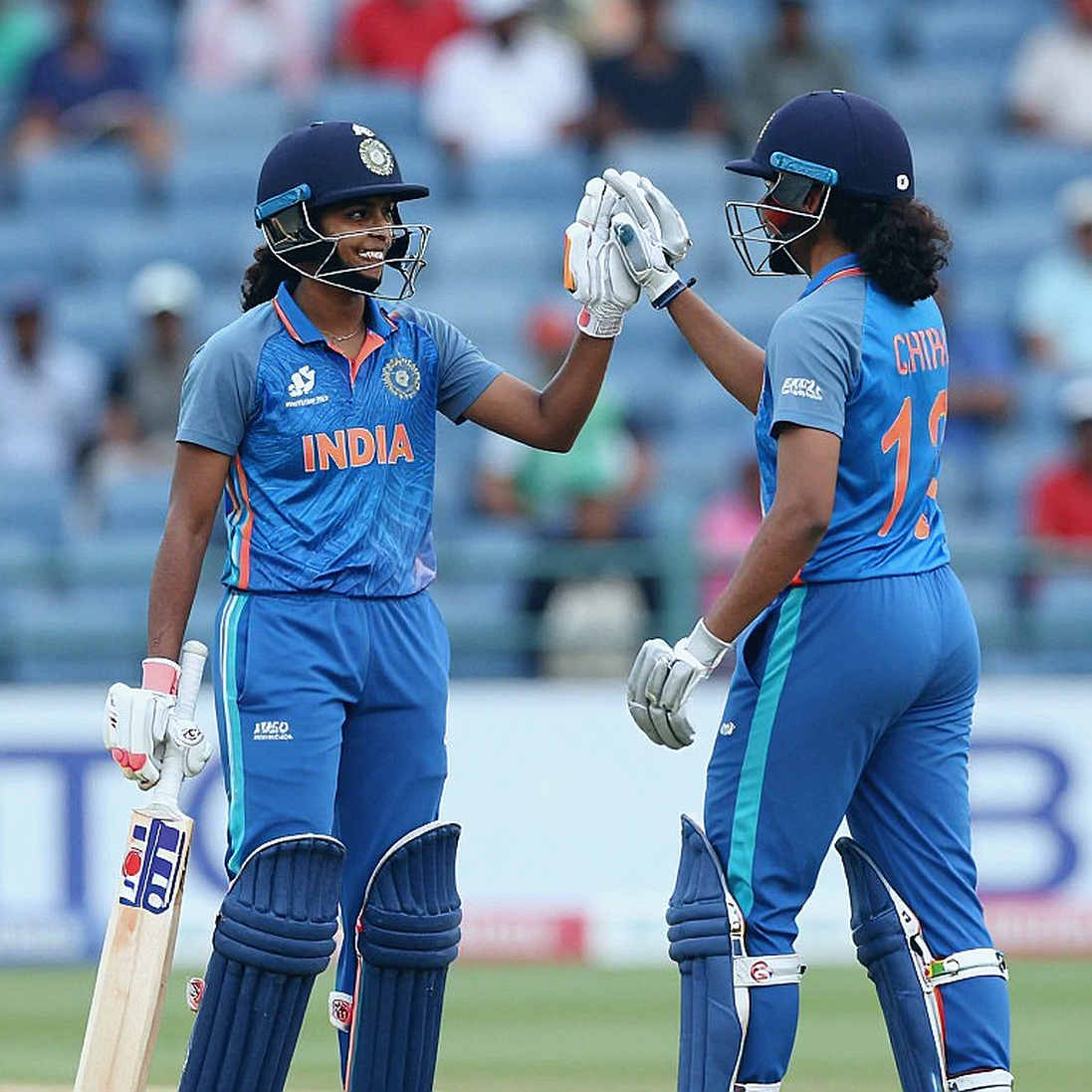
Recently that picture has changed. Australia's Women's Big Bash League demonstrated that women's franchise cricket can draw audiences. The launch of the Women's Premier League in India gave the shift a new scale. Television audiences, stadium attendance and sponsorship all showed visible growth.
But growth and equality are not the same thing. Match volume, match fees, the size of support staff, medical provision and media coverage all still lag. The real challenge is not staging one big tournament but building a regular, visible and financially sustainable structure across the whole year.
The second challenge is sustainability. In many countries women's domestic competitions still run on limited resources. Until a player at domestic level can believe she can build a career in cricket, a large share of the talent pool will never enter the sport. That is where investment offers the highest return.
Domestic Structure and Grassroots
A country's cricket strength rests on its domestic structure. The Ranji Trophy in India, the Sheffield Shield in Australia and the County Championship in England have produced national players for decades. Their value lies not only in competition but in the discipline that only the long format can teach.
The weakest link in the domestic chain is the grassroots. School cricket, street cricket, club cricket and local coaching are where talent emerges. When coaching becomes expensive and access to equipment is limited, the sport becomes a financial filter and much of the talent is lost before it is ever seen.
The answer is not government schemes alone. Boards must build a permanent structure of affordable local coaching, shared facilities and school-level tournaments. Selection must also be made transparent, so that players believe good performance really is the route forward.
Data and video analysis for talent identification are now possible and are being used in some places. The advantage is that players in remote areas can be observed without being forced to migrate to big cities. But that only works if match data is captured everywhere; without data, the technology will remain confined to the metros.
Fan Culture, Media and the Short Form
Audience behaviour has changed. Once the cricket experience was a match, a commentary box and a newspaper report. Today a viewer follows the game across several screens, languages and formats — live streams, short videos, stat cards and social media argument.
The biggest effect is a shrinking attention span. Even a three-hour T20 match is now scrollable content for many. This is inherently hostile to Test cricket, whose beauty lies in slow tempo, patience and gradual change.
Yet there is hope buried in this. Digital media has freed cricket from geography. An Indian viewer can watch an Australian domestic match; an English viewer can enjoy the Caribbean Premier League. That globalisation is the foundation on which future markets will be built.
Regional-language broadcasting has been the most successful experiment in this direction. When commentary is in the viewer's own language, engagement deepens. This is not merely translation; it is culture and identity. Leagues and boards that ignore this dimension lose half their domestic audience.
The stadium experience, too, has become a separate product. People come for a show as much as a match — music, lights, screens, food and safety. Venues that deliver the experience draw crowds; venues that do not make television the more comfortable choice.
Ethics: Betting, Corruption and Mental Health
As money has grown in cricket, so have the risks attached to it. Match-fixing and spot-fixing cases have surfaced periodically, and every major board now maintains an anti-corruption unit. This is not only a law-and-order question; it is a question of the sport's credibility.
The rise of online betting is a new challenge. When betting companies become sponsors of teams and leagues, conflicts of interest arise. Audiences are left with the impression that sport and gambling are the same thing, when in fact they are fundamentally different. Some countries ban it; others still treat it as a grey zone.
The third and perhaps most important issue is mental health. A professional cricketer lives under constant performance pressure, social media criticism and relentless travel. These were once treated as personal weakness; slowly it is being accepted that mental fatigue is an occupational hazard that teams must manage.
Linked to this is the question of players' rights and contract transparency. Franchise contracts are complex and a player's bargaining power can be limited, especially for the young or less famous. A clear, shared and fair contracting framework is essential to the game's long-term credibility.
The Olympics and New Markets
Cricket's relationship with the Olympics is old and unfinished. The sport appeared once in the early twentieth century and then stayed outside the programme for decades. Its return to the Olympic stage is now the strongest symbol of cricket's global ambition.
The greatest benefit of inclusion is reach into countries where cricket is not traditionally played. Government funding, a place in national sports policy and the attention of new audiences are things only the Olympics can provide. This matters especially for the American market, where cricket remains a niche, diaspora-centred sport.
There is a second side, though. The Olympics is a vast event in which cricket will have to prove itself inside a fixed time window, a fixed format and a fixed venue. Whether that enriches the game or turns it into one more television product will be settled in the years ahead.
The Road Ahead
First, cricket needs a stable and predictable international calendar — one that fixes space for all three formats, gives franchise leagues a window and guarantees mandatory rest periods for players. Without it, every dispute will resume where the last one ended.
Second, revenue distribution should rest not only on market size but on growth potential. Giving smaller boards more home and international fixtures widens the game and improves competition. A sport in which only three or four teams can win will eventually lose its audience.
Third, player welfare must be treated as investment rather than cost. Medical support, mental health support, workload management and fair contracts are as much part of the game as practice and strategy. A sport that burns out its players burns out its future.
Finally, cricket must remember that its strength is its diversity. The depth of Test cricket, the balance of the ODI and the energy of T20 are each valuable for different reasons. They should be seen as complements rather than rivals. The sport that keeps all its forms alive will remain the world's favourite game in the next decade.
Cricket stands at a decisive turn. Money, technology, audiences and talent are all more available than ever. The question is whether the sport can bind these four into a framework that is fair to players, viewers and competition alike. That answer will not be settled on the field but in the boardroom — and it will determine whether, for the next generation, cricket remains a game or becomes only a business.
संबंधित खिलाड़ी
अनुशंसित
154 for 9 to 242: Pakistan's last pair turns England's scoreboard2026-10-26
The Dew Towel and the Six-Bowler Ledger: What the Zimbabwe Series Gave India, and What It Did Not2026-10-23
When the Scorecard Reads 'N/A': What an Empty File Teaches Cricket Analysis2026-10-30
The Empty Scorecard: When Cricket's Record Returns N/A2026-11-09
Fakhar's 127, Saad Baig's 74 and Shaheen's Two-End Contribution: Pakistan Chase Down 326 With Three Wickets to Spare2026-11-01
अनुशंसित
Kamboj's 2/22: The Art of Control on Eden Park's Seaming Pitch That the Scorecard Doesn't Tell You2026-11-05
From Vadodara to Mumbai: The Real Women's Cricket Agenda Buried in the WPL 2027 Schedule2026-11-05
Pakistan Clinch the Tri-Series, but Fakhar Zaman's 127 Leaves a Five-Run Top Order Behind2026-11-01
The Empty-Analysis Crisis in Cricket Content Pipelines: Why Data-Driven Reporting Cannot Run Without Facts2026-11-03
The Cricket Report Has No Evidentiary Base: Match, Player and Source Details Are Missing2026-11-10
Empty Payload, Full Table: The Cricket Data Failure That Never Gets Reported2026-11-09